Deep Dreaming at Vixlet
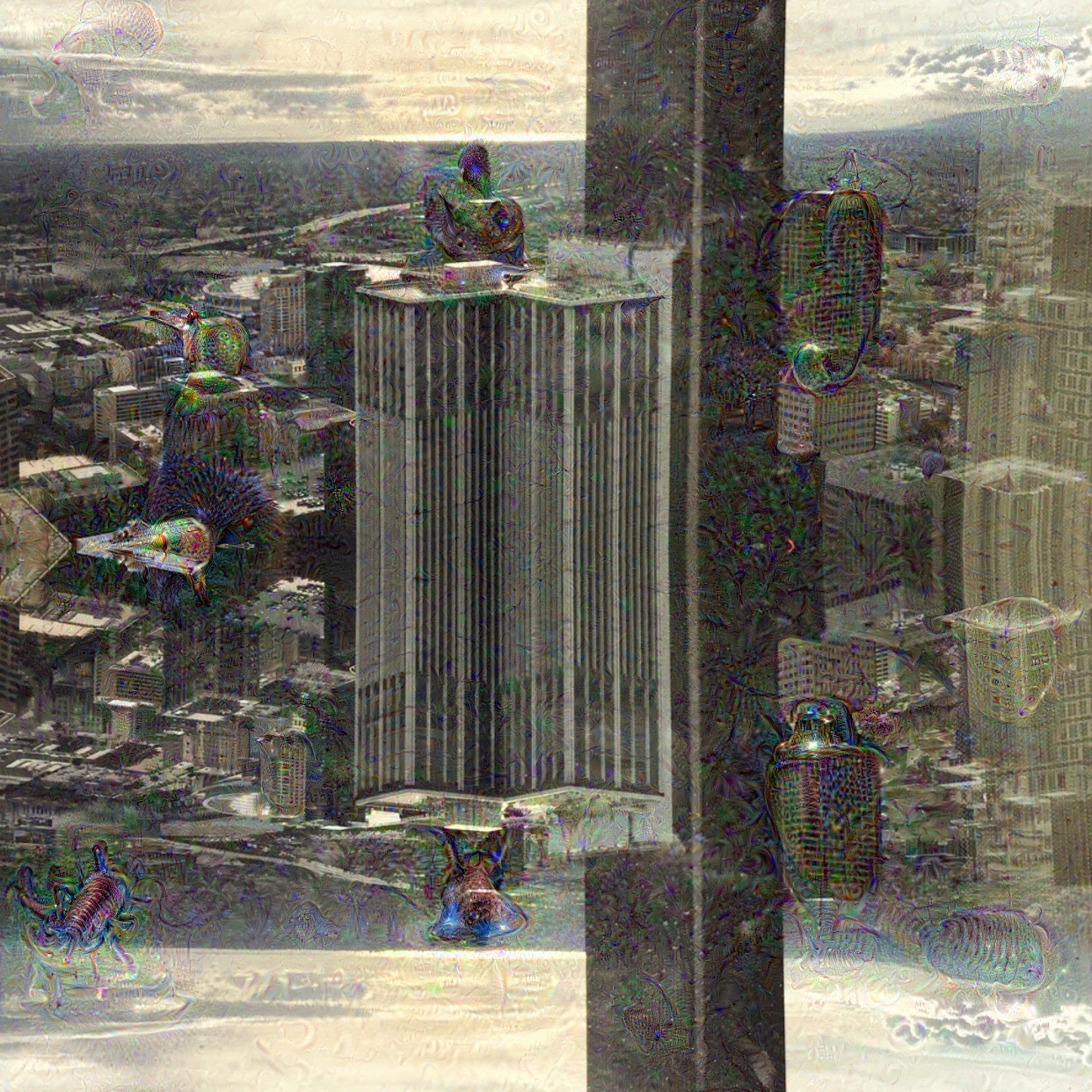
Last weekend I started playing around with Deep Dreams, an artistic, surreal application of Google’s deep belief neural networks and applied it to a picture from my colleague Steve Eldridge of Vixlet HQ’s inspiring view of downtown LA:
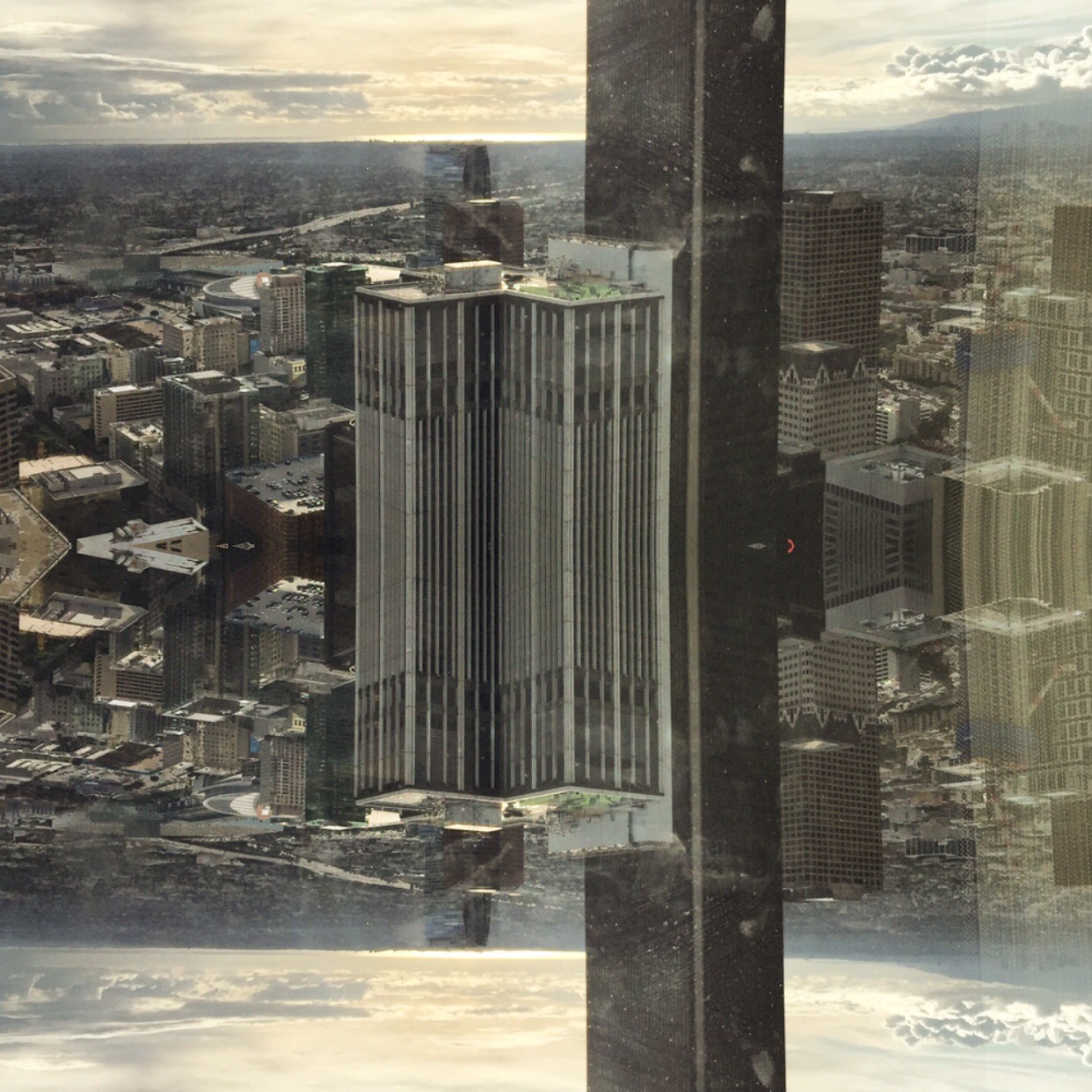
Here’s what it looks like at the deepest layer of the deep dream neural network (I’ll explain what that means shortly).
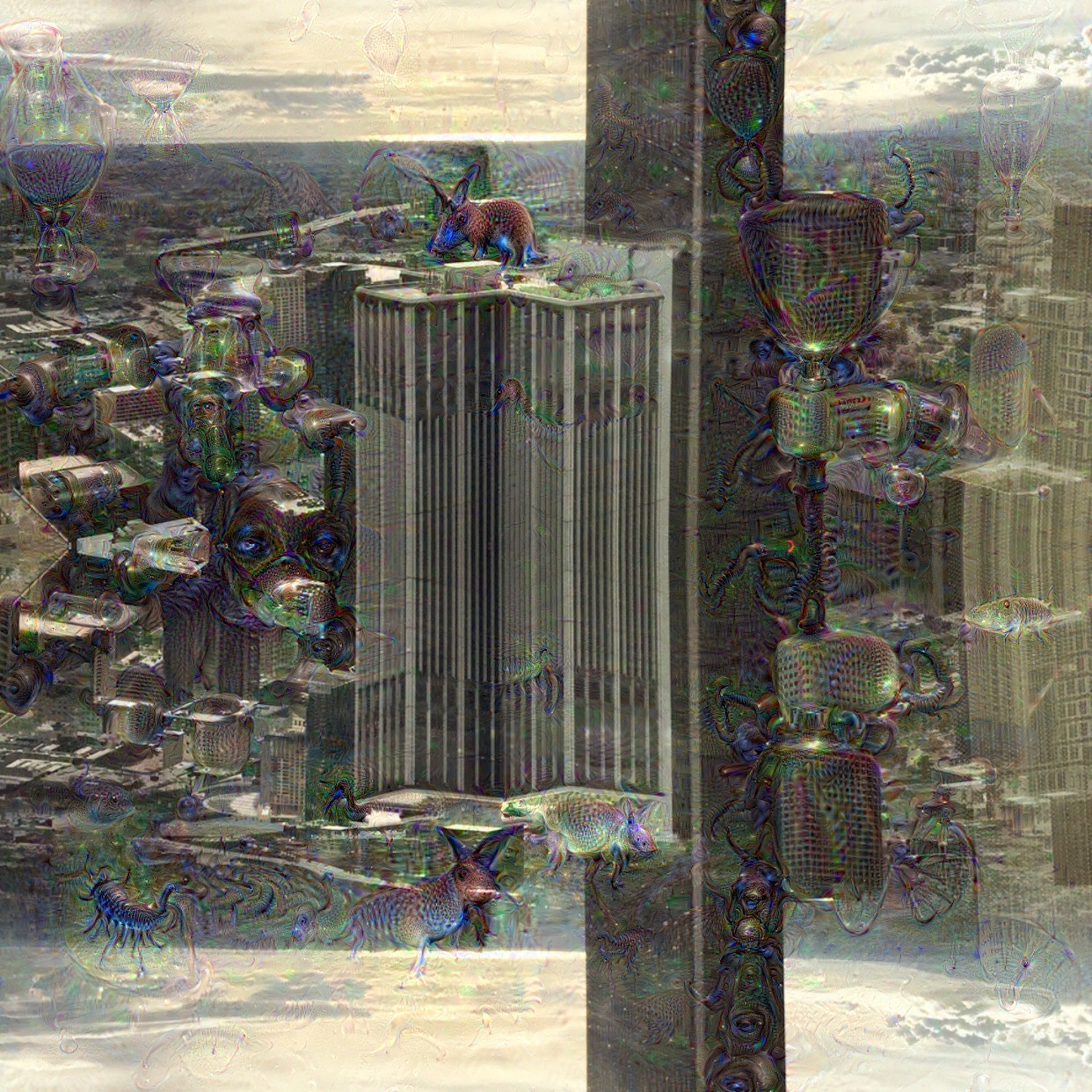
Although there is a tutorial already, I thought I’d make a blog post about it because I had to make some modifications to the code there and people were asking about how I got it working.
First of all, the part that I had to modify was the image loading commands. The tutorial used ipython notebooks, which I’m not very famliar with. Also they loaded the image into a numpy array via PIL, python image library. I’m not sure if it was due to PIL or ipython notebooks, but this didn’t work for me. Instead, I loaded the image to a numpy array via opencv (called cv2 in python). That’s an obvious thing to try if you’re familiar with computer vision in python, but otherwise it would be a place to get stuck. So basically, I used the code from the tutorial but added it to a single script and changed a couple of lines:
#!/usr/bin/env python

# imports and basic notebook setup
from cStringIO import StringIO
import numpy as np
import scipy.ndimage as nd
import PIL.Image
import sys
from IPython.display import clear_output, Image, display
from google.protobuf import text_format

import caffe

def showarray(a, fmt='jpeg'):
    a = np.uint8(np.clip(a, 0, 255))
    f = StringIO()
    PIL.Image.fromarray(a).save(f, fmt)
    display(Image(data=f.getvalue()))

model_path = '../caffe/models/bvlc_googlenet/' # substitute your path here
net_fn   = model_path + 'deploy.prototxt'
param_fn = model_path + 'bvlc_googlenet.caffemodel'

# Patching model to be able to compute gradients.
# Note that you can also manually add "force_backward: true" line to "deploy.prototxt".
model = caffe.io.caffe_pb2.NetParameter()
text_format.Merge(open(net_fn).read(), model)
model.force_backward = True
open('tmp.prototxt', 'w').write(str(model))

net = caffe.Classifier('tmp.prototxt', param_fn,
                       mean = np.float32([104.0, 116.0, 122.0]), # ImageNet mean, training set dependent
                       channel_swap = (2,1,0)) # the reference model has channels in BGR order instead oF\
 RGB

# a couple of utility functions for converting to and from Caffe's input image layout
def preprocess(net, img):
    return np.float32(np.rollaxis(img, 2)[::-1]) - net.transformer.mean['data']
def deprocess(net, img):
    return np.dstack((img + net.transformer.mean['data'])[::-1])

def make_step(net, step_size=1.5, end='inception_4c/output', jitter=32, clip=True):
    '''Basic gradient ascent step.'''

    src = net.blobs['data'] # input image is stored in Net's 'data' blob
    dst = net.blobs[end]

    ox, oy = np.random.randint(-jitter, jitter+1, 2)
    src.data[0] = np.roll(np.roll(src.data[0], ox, -1), oy, -2) # apply jitter shift

    net.forward(end=end)
    dst.diff[:] = dst.data  # specify the optimization objective
    net.backward(start=end)
    g = src.diff[0]
    # apply normalized ascent step to the input image
    src.data[:] += step_size/np.abs(g).mean() * g

    src.data[0] = np.roll(np.roll(src.data[0], -ox, -1), -oy, -2) # unshift image

    if clip:
        bias = net.transformer.mean['data']
        src.data[:] = np.clip(src.data, -bias, 255-bias)

def deepdream(net, base_img, iter_n=10, octave_n=4, octave_scale=1.4, end='inception_4c/output', clip=True, **step_params):
    # prepare base images for all octaves
    octaves = [preprocess(net, base_img)]
    for i in xrange(octave_n-1):
        octaves.append(nd.zoom(octaves[-1], (1, 1.0/octave_scale,1.0/octave_scale), order=1))

    src = net.blobs['data']
    detail = np.zeros_like(octaves[-1]) # allocate image for network-produced details
    for octave, octave_base in enumerate(octaves[::-1]):
        h, w = octave_base.shape[-2:]
        if octave > 0:
            # upscale details from the previous octave
            h1, w1 = detail.shape[-2:]
            detail = nd.zoom(detail, (1, 1.0*h/h1,1.0*w/w1), order=1)

        src.reshape(1,3,h,w) # resize the network's input image size
        src.data[0] = octave_base+detail
        for i in xrange(iter_n):
            make_step(net, end=end, clip=clip, **step_params)

            # visualization
            vis = deprocess(net, src.data[0])
            if not clip: # adjust image contrast if clipping is disabled
                vis = vis*(255.0/np.percentile(vis, 99.98))
            showarray(vis)
            print octave, i, end, vis.shape
            clear_output(wait=True)

        # extract details produced on the current octave
        detail = src.data[0]-octave_base
    # returning the resulting image
    return deprocess(net, src.data[0])

# this is my humble addition/modification
import cv2
if not len(sys.argv) > 2: # check arguments to script
    print "Usage: ./deepdream.py input_file output_file [level]"
    sys.exit()
layer = "inception_4c/output"
if len(sys.argv) == 4:    # set default end/layer
    layer = sys.argv[3]
img = cv2.imread(sys.argv[1])
dd = deepdream(net, img, end=layer)
cv2.imwrite(sys.argv[2], dd)The core python library that performs the neural network operations is Caffe. If the code above doesn’t work, it could be because I used a version of Caffe that I compiled to make use of the NVidia Cuda libraries. I don’t think that is necessary, but I had been using that to speed up unrelated computer vision work I’ve been doing.
Now I’ll explain a little bit about the inception neural network that deep dreams is based on. The neural network is visualized below.

You may want to open the pdf (
) to see it in more detail. The left is the lower level of the neural network that processes the image input and the right is the deeper level of the neural network. The intermediate levels range from the shallow end which identifies edges and shapes, to patterns, and then to patches and objects in the deep end. The “end” named argument to the deepdream function specifies what layer to output, given the input image. Below are a selection of various layers from shallow to deep:
conv1/7x7_s2
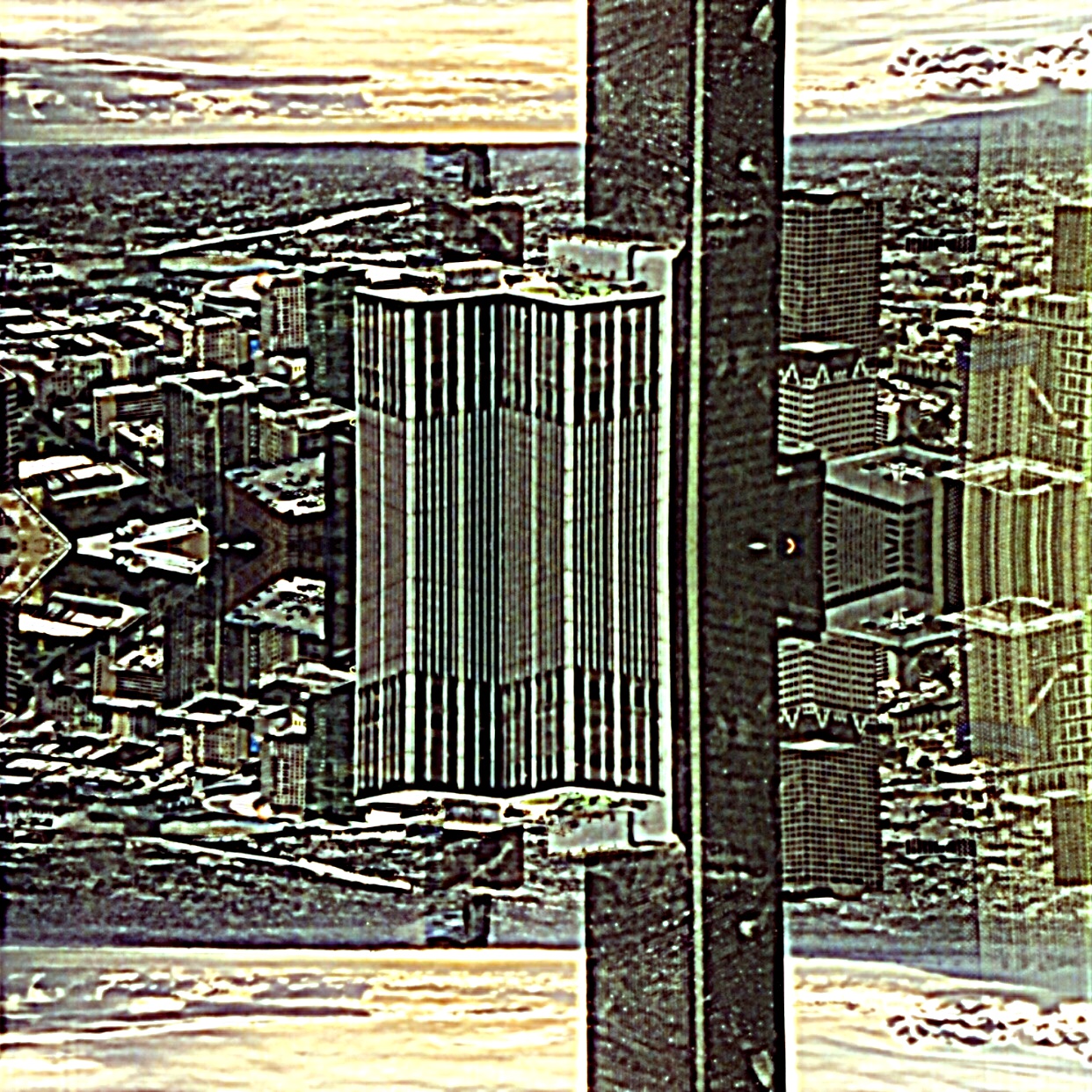
pool1/3x3_s2
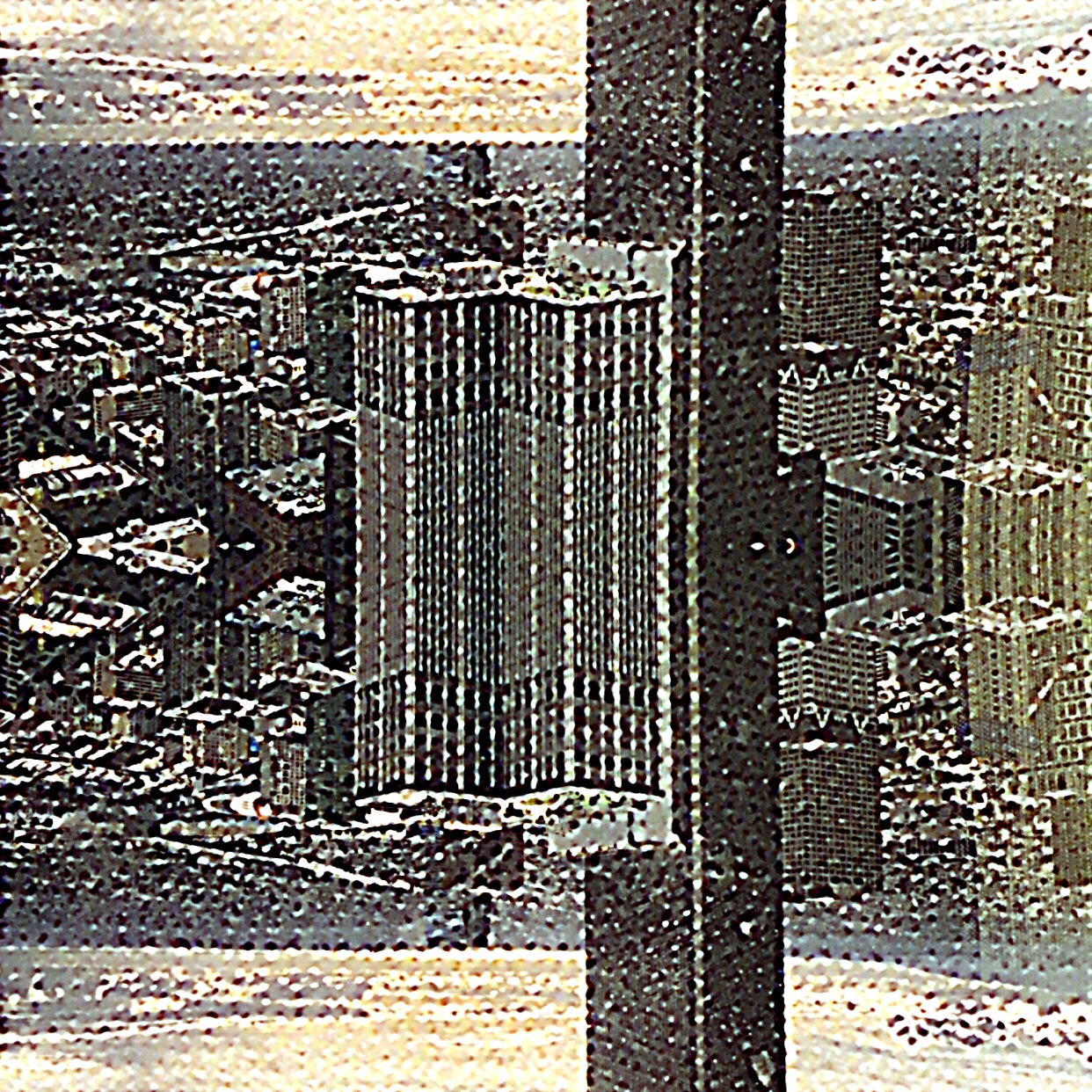
pool1/norm1
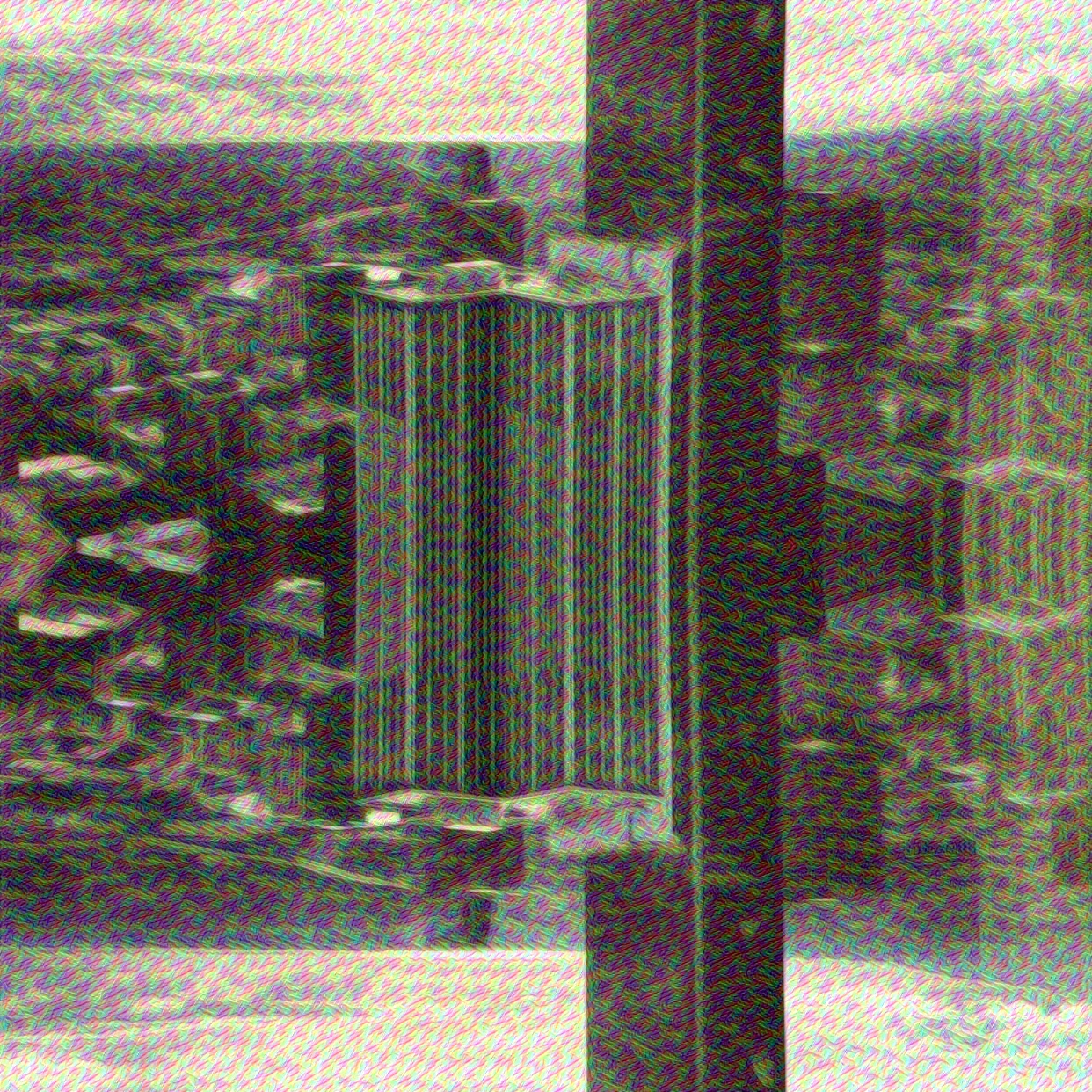
conv2/3x3_reduce
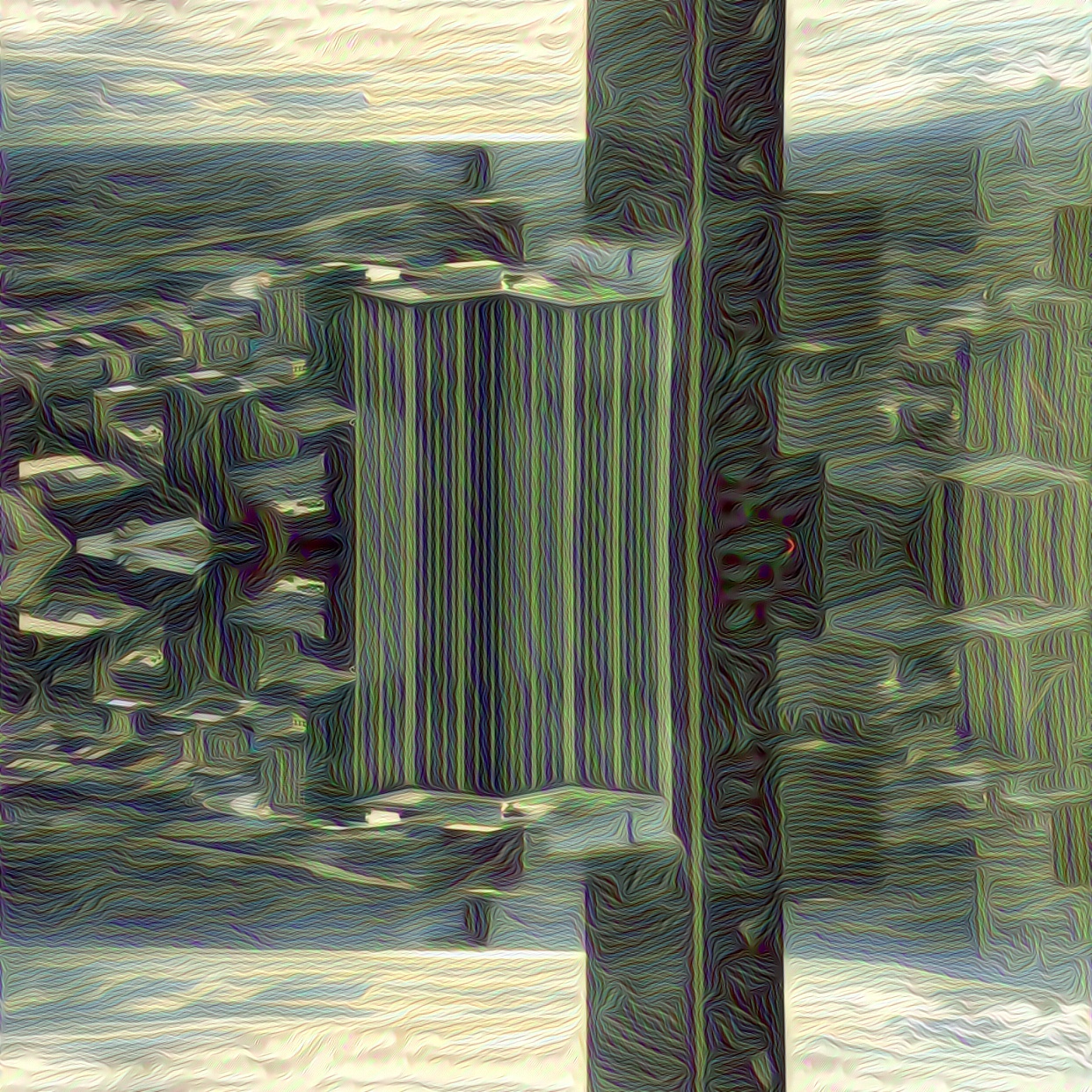
conv2/3×3
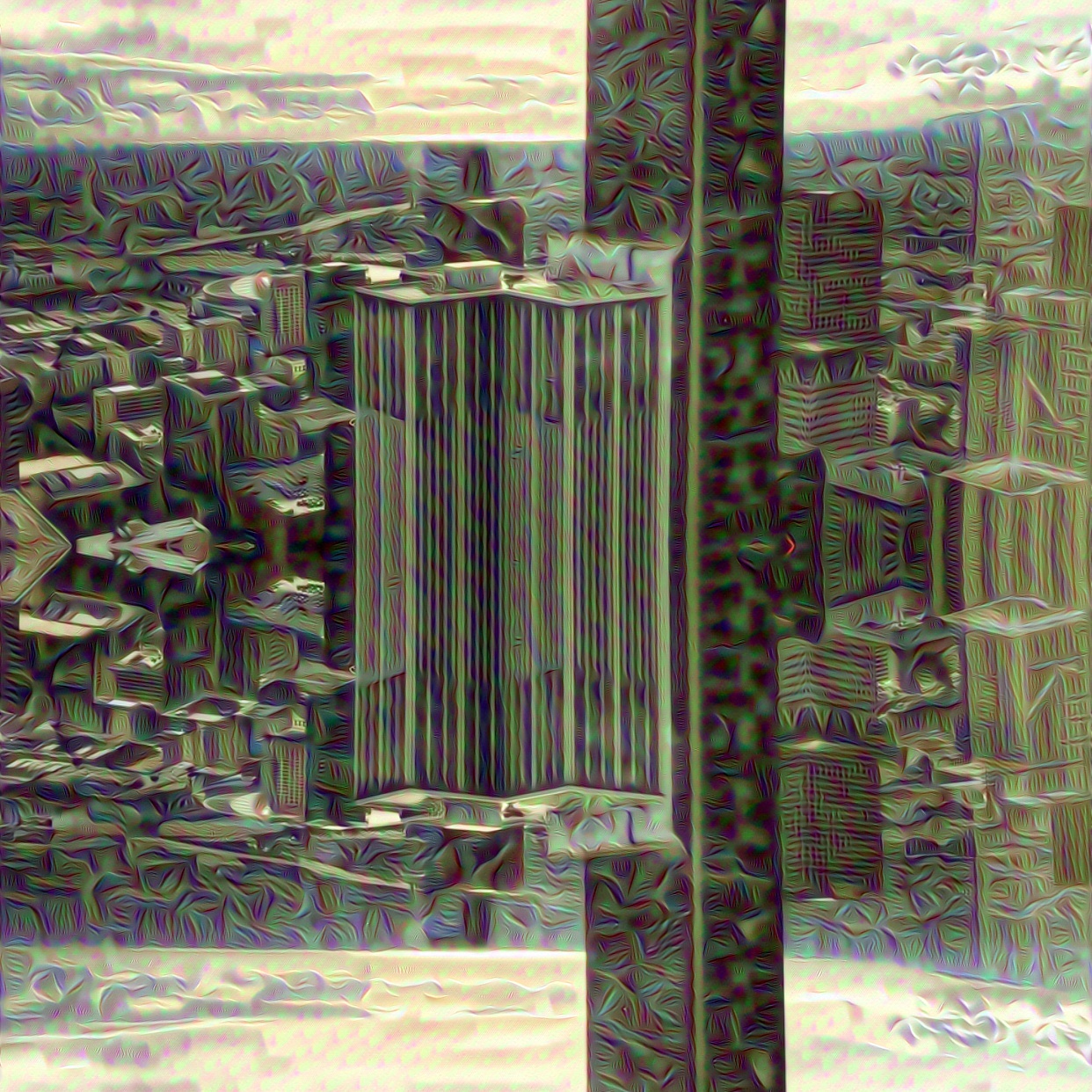
conv2/norm2
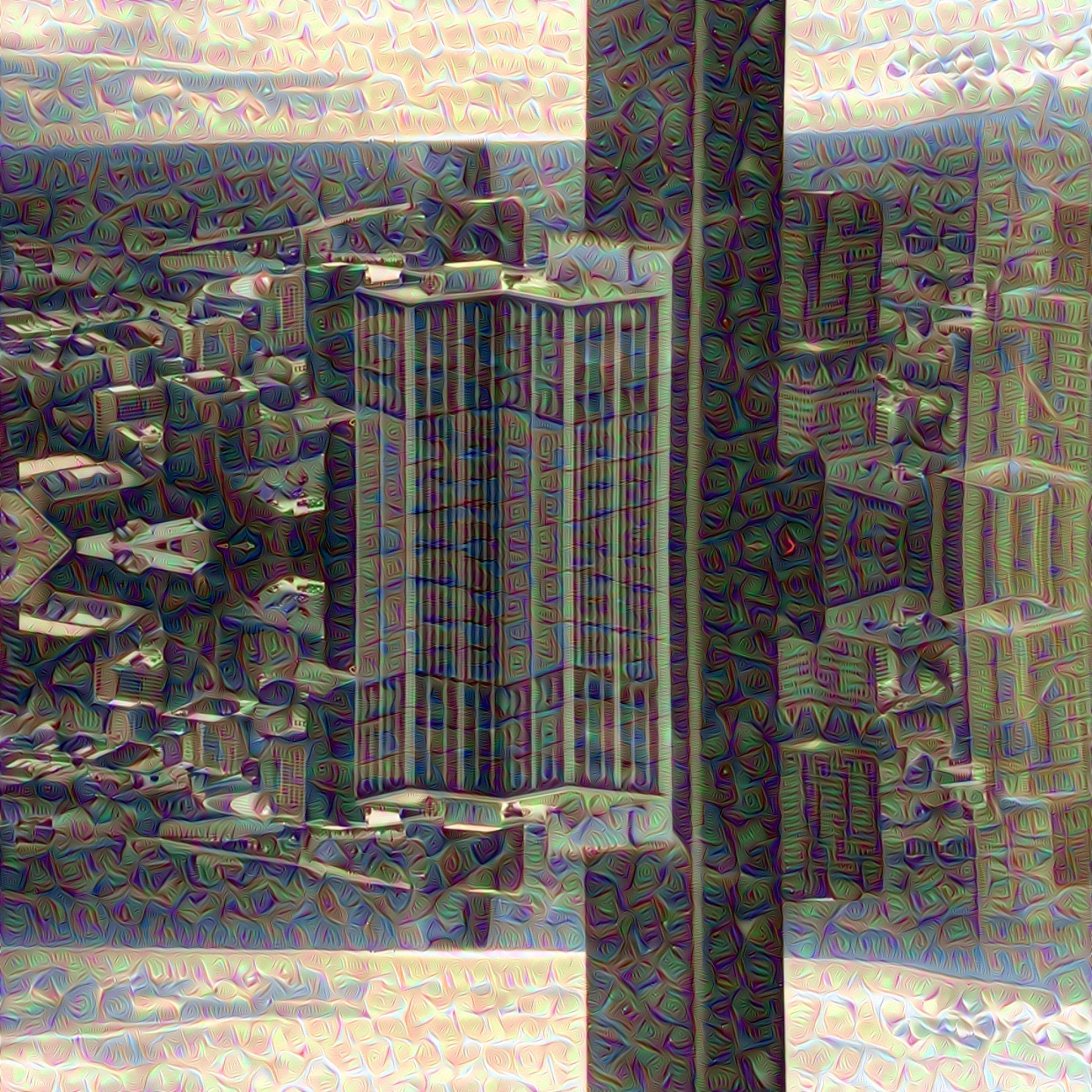
pool2/3x3_s2
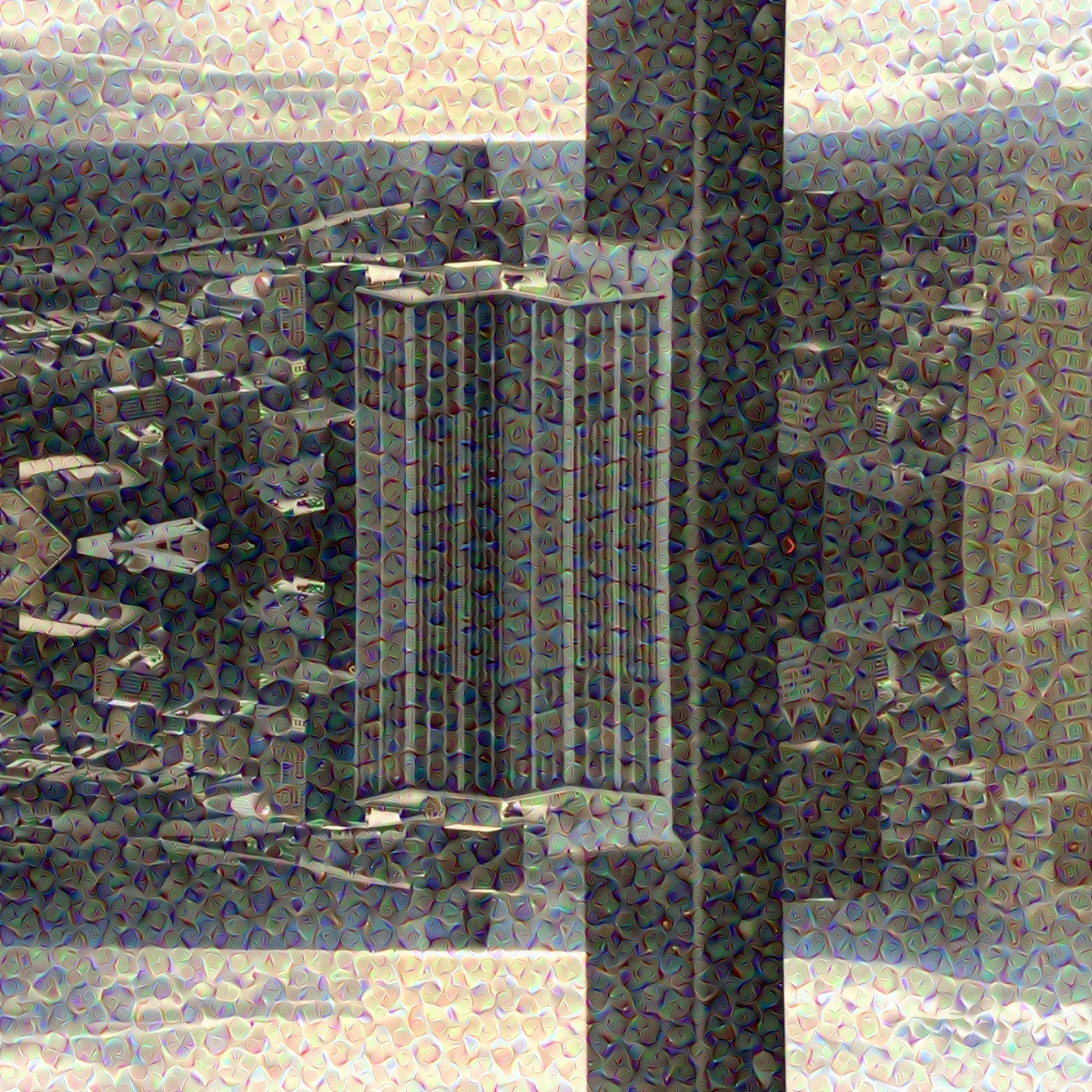
inception_3a/pool
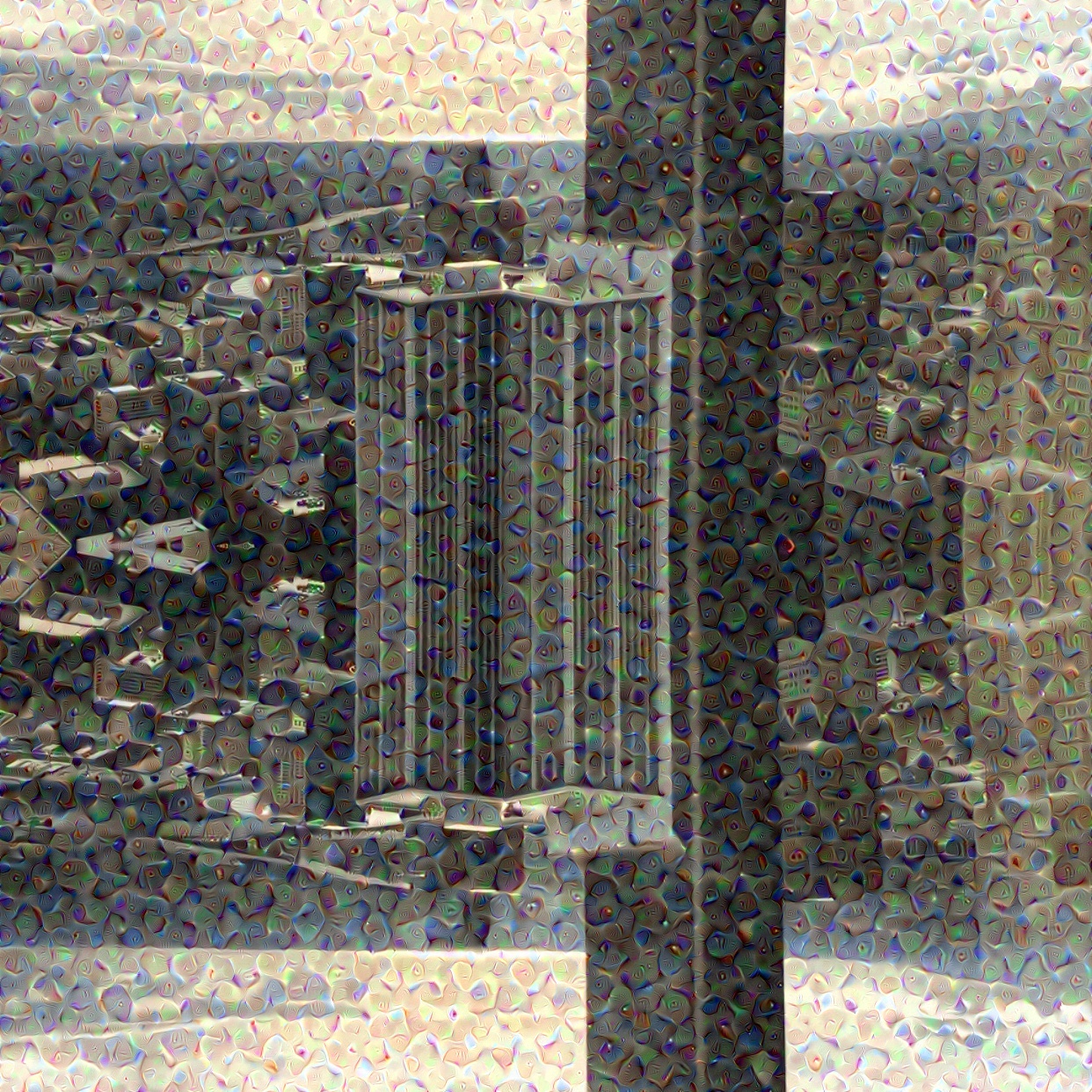
inception_3a/5x5_reduce
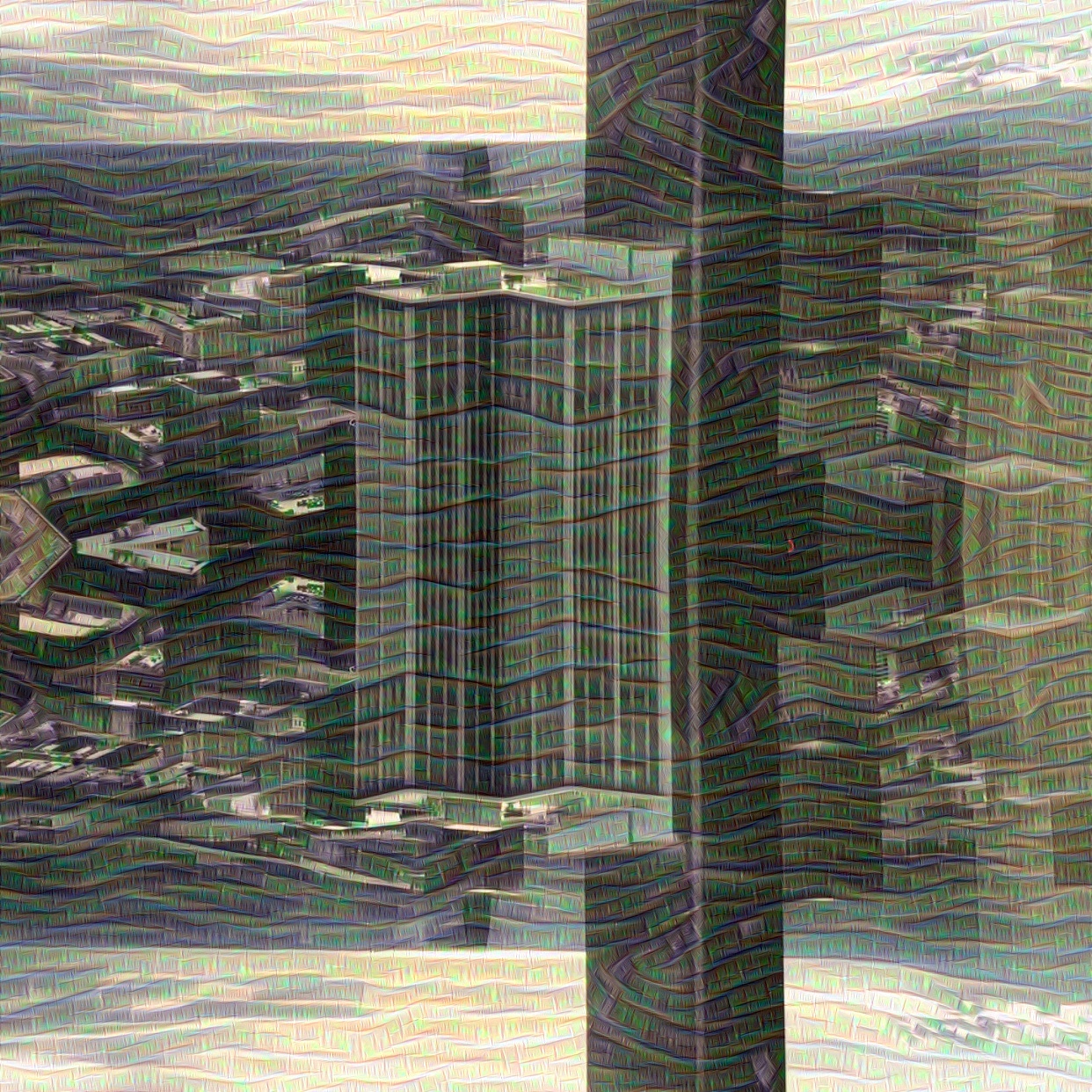
inception_3a/1×1
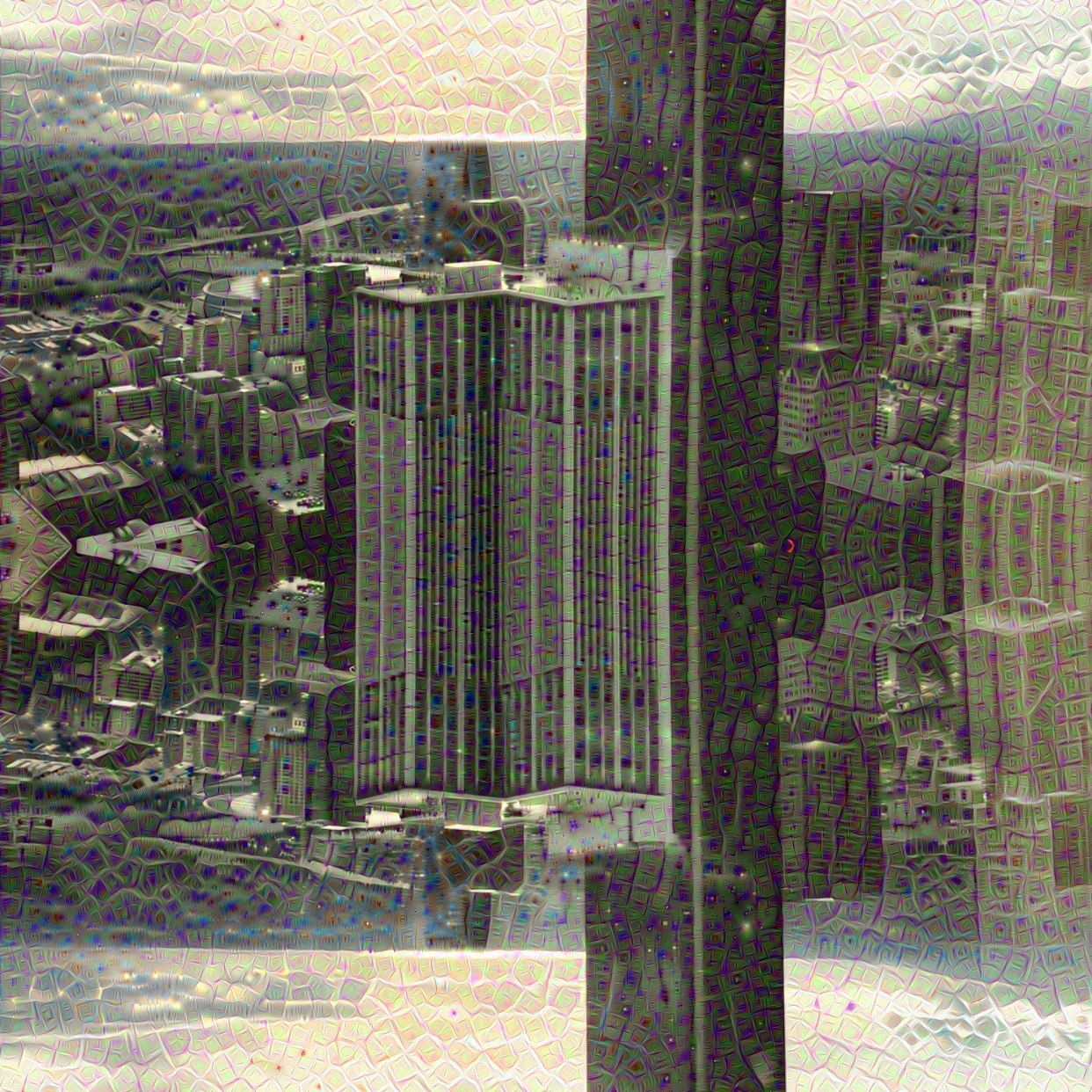
inception_3a/3x3_reduce
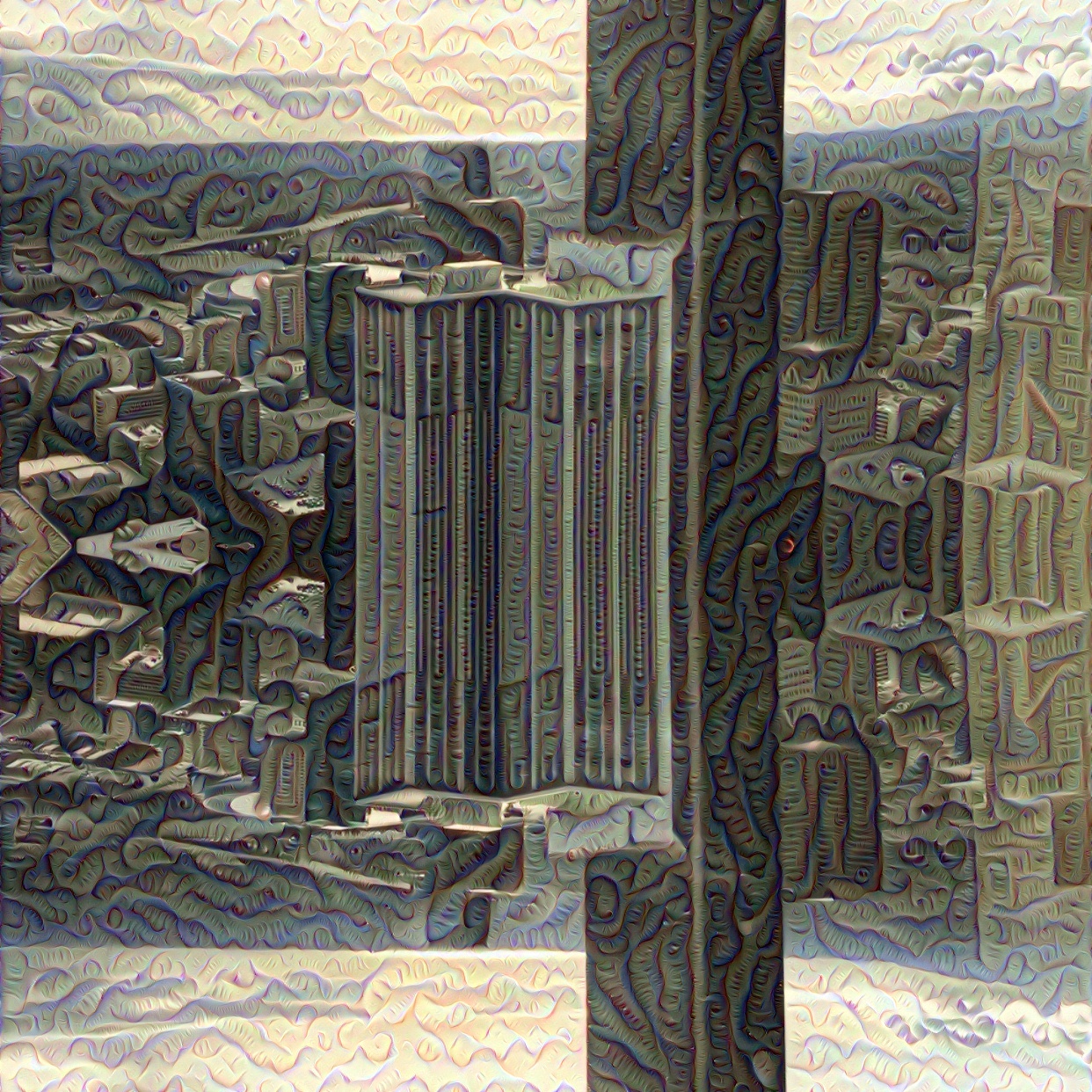
inception_3a/pool_proj
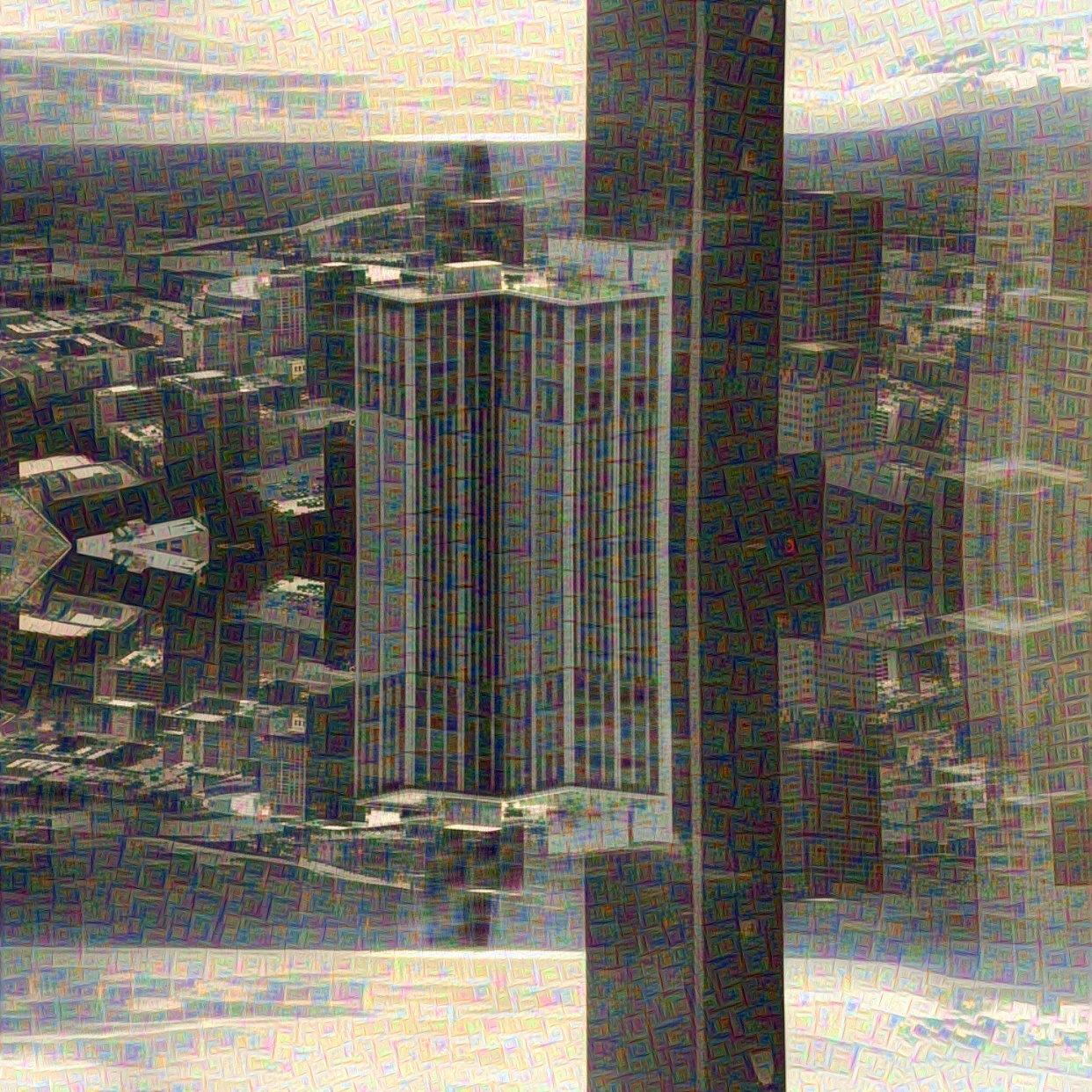
inception_3a/5×5
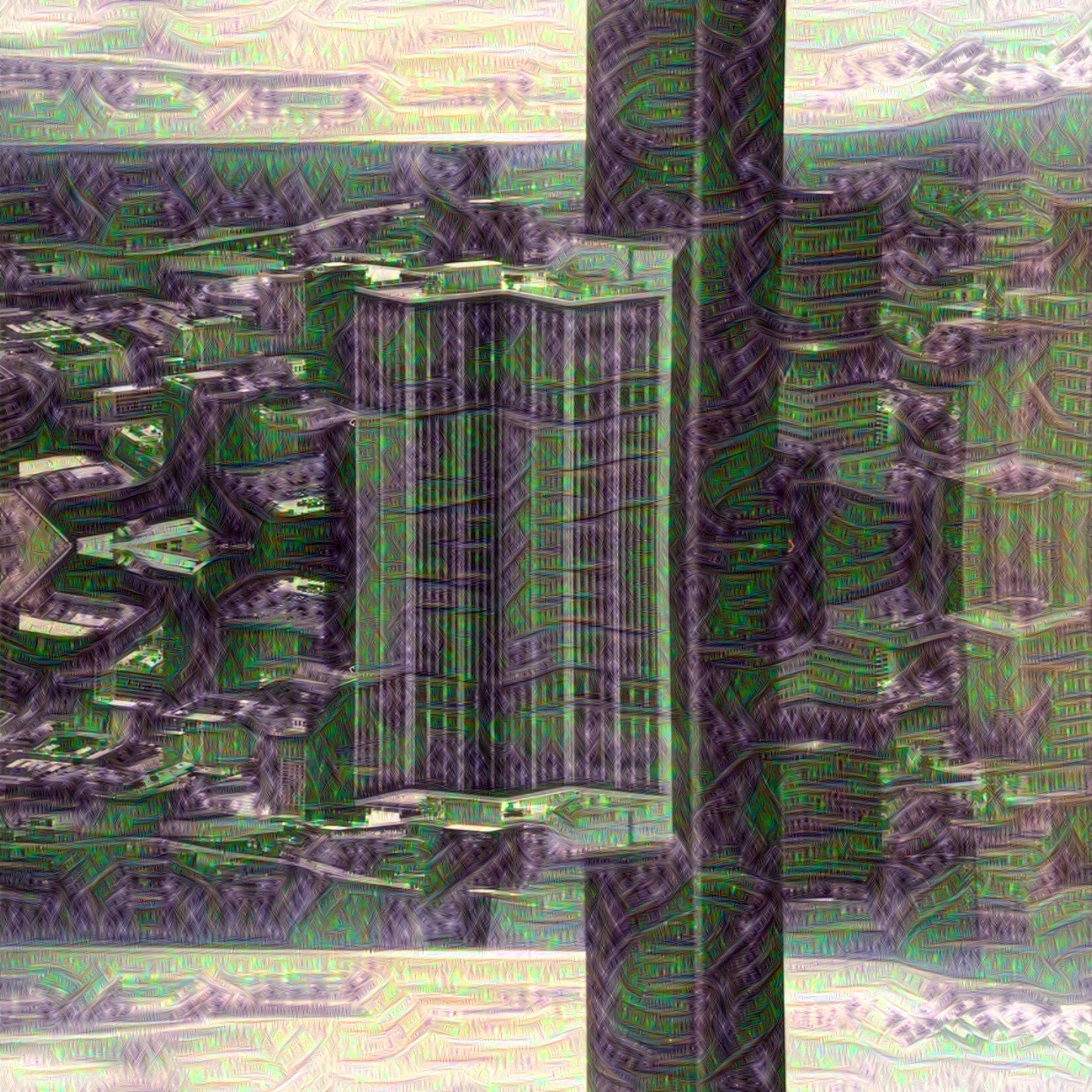
inception_3a/3×3
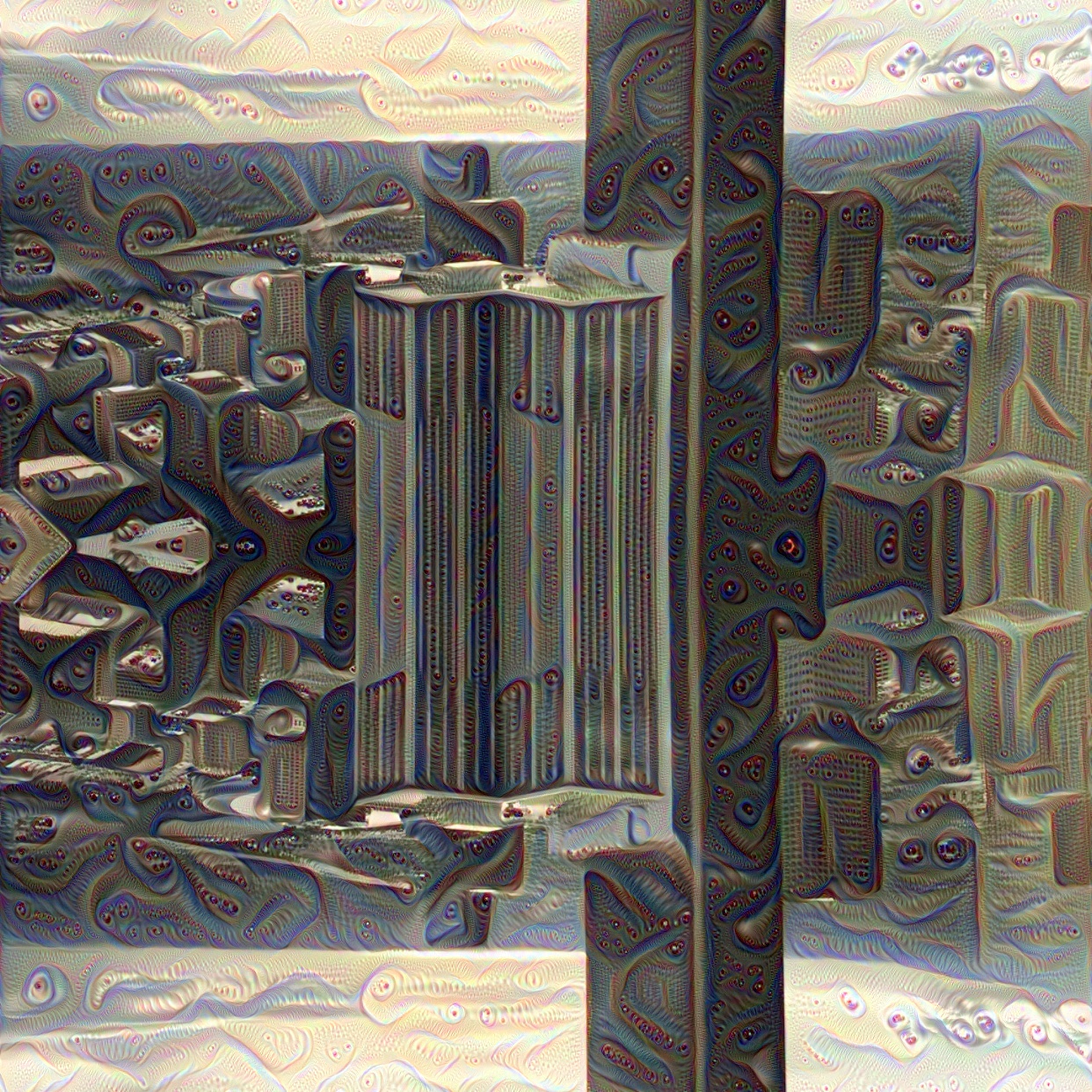
inception_3a/output
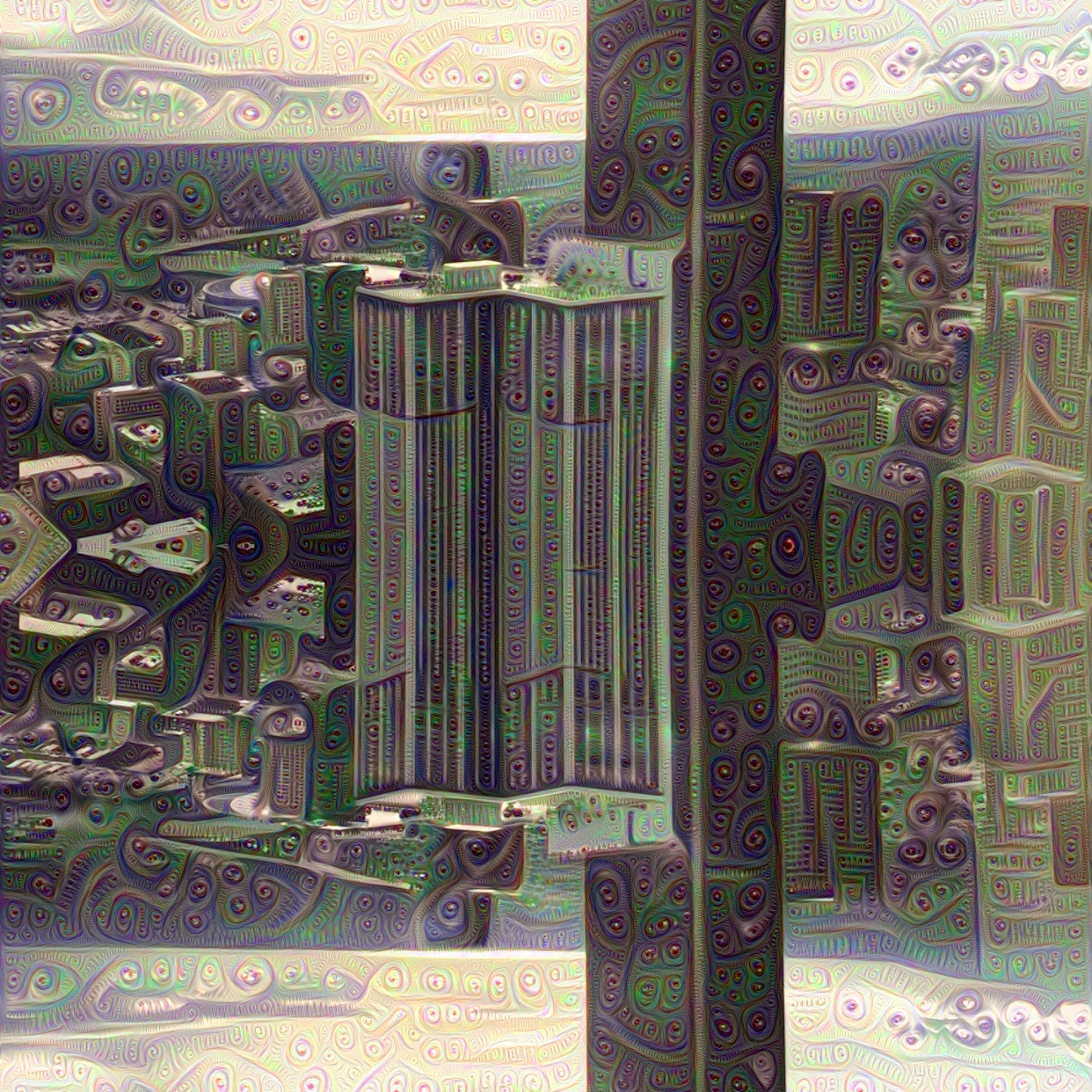
inception_3b/output
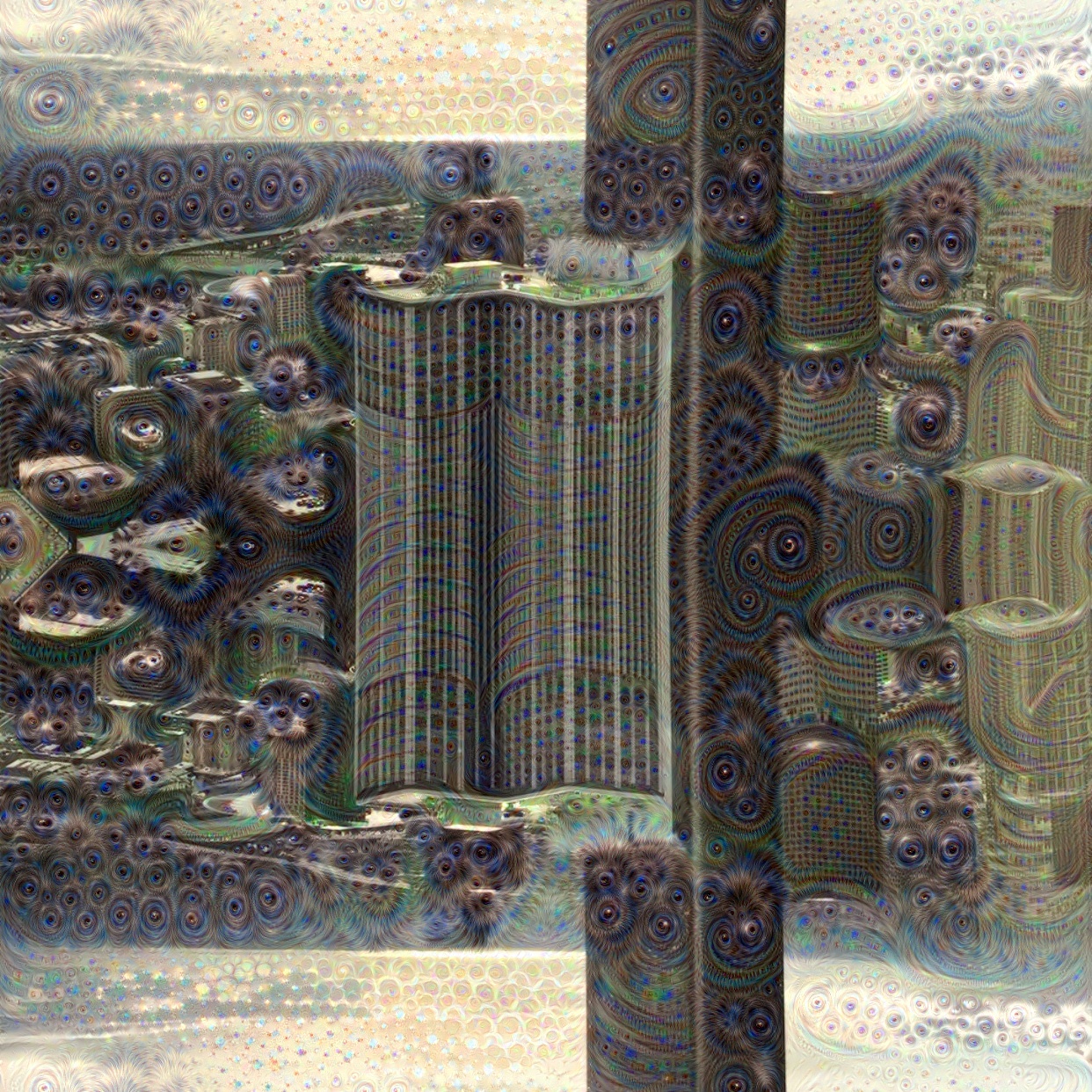
inception_4a/pool
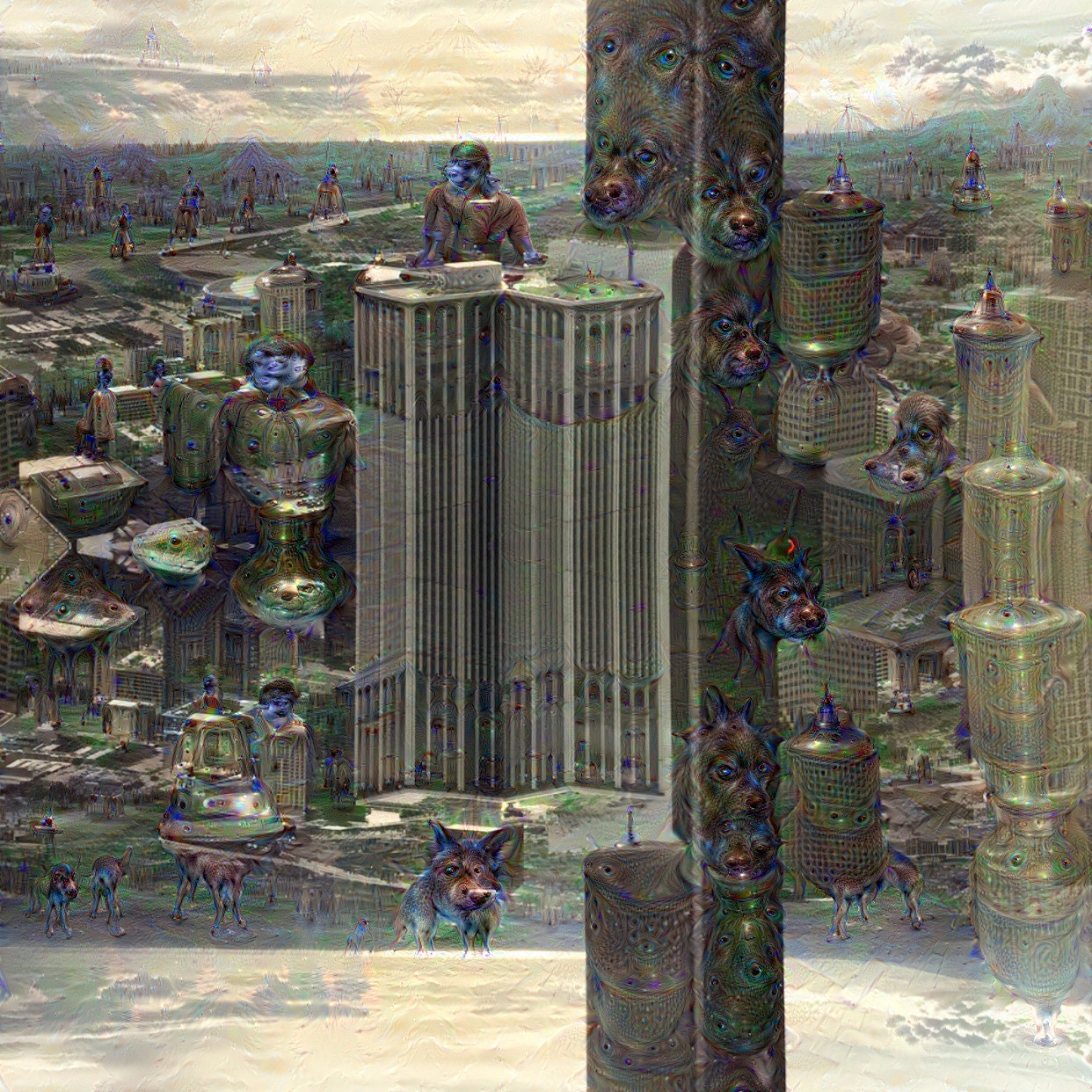
inception_4a/5x5_reduce
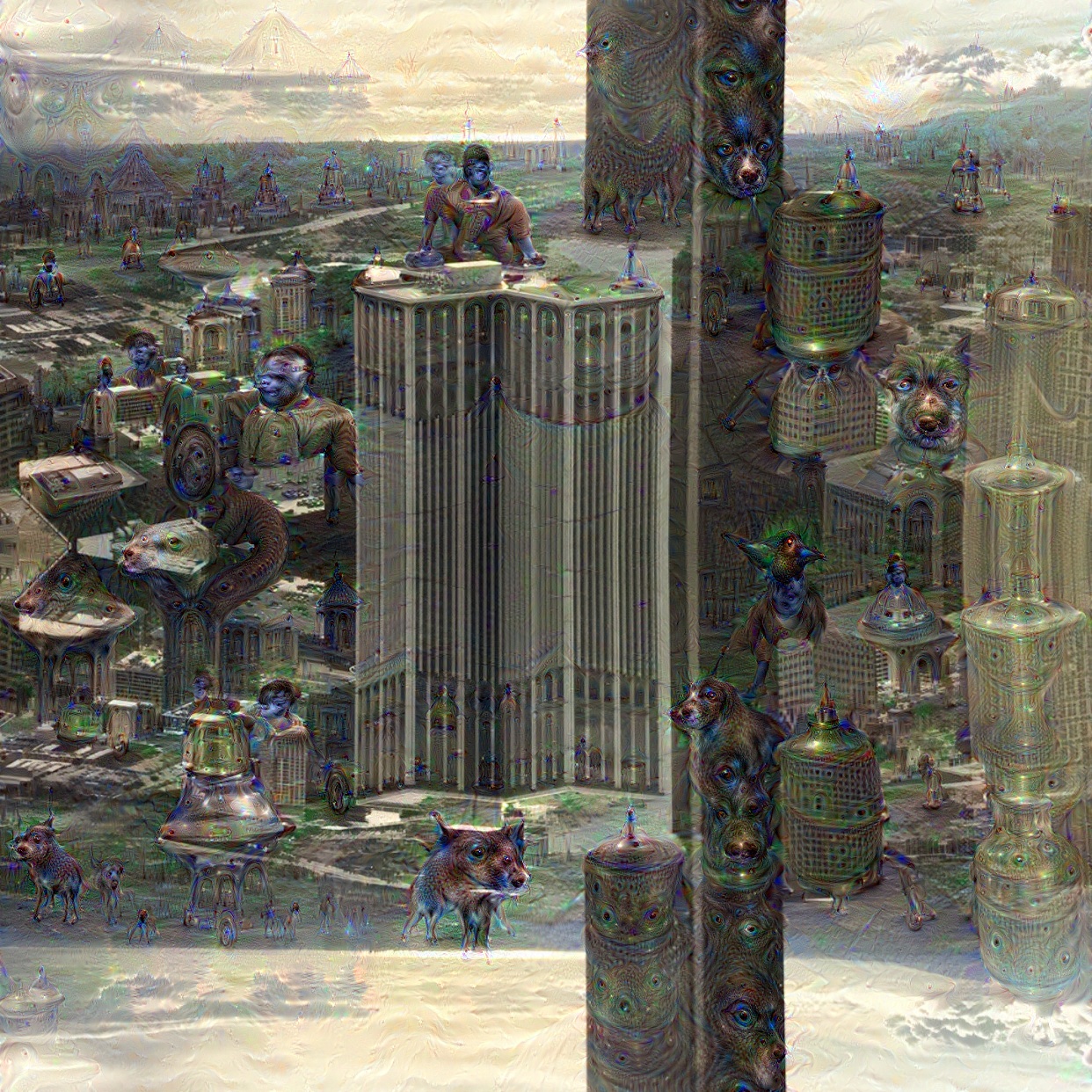
inception_4a/1×1
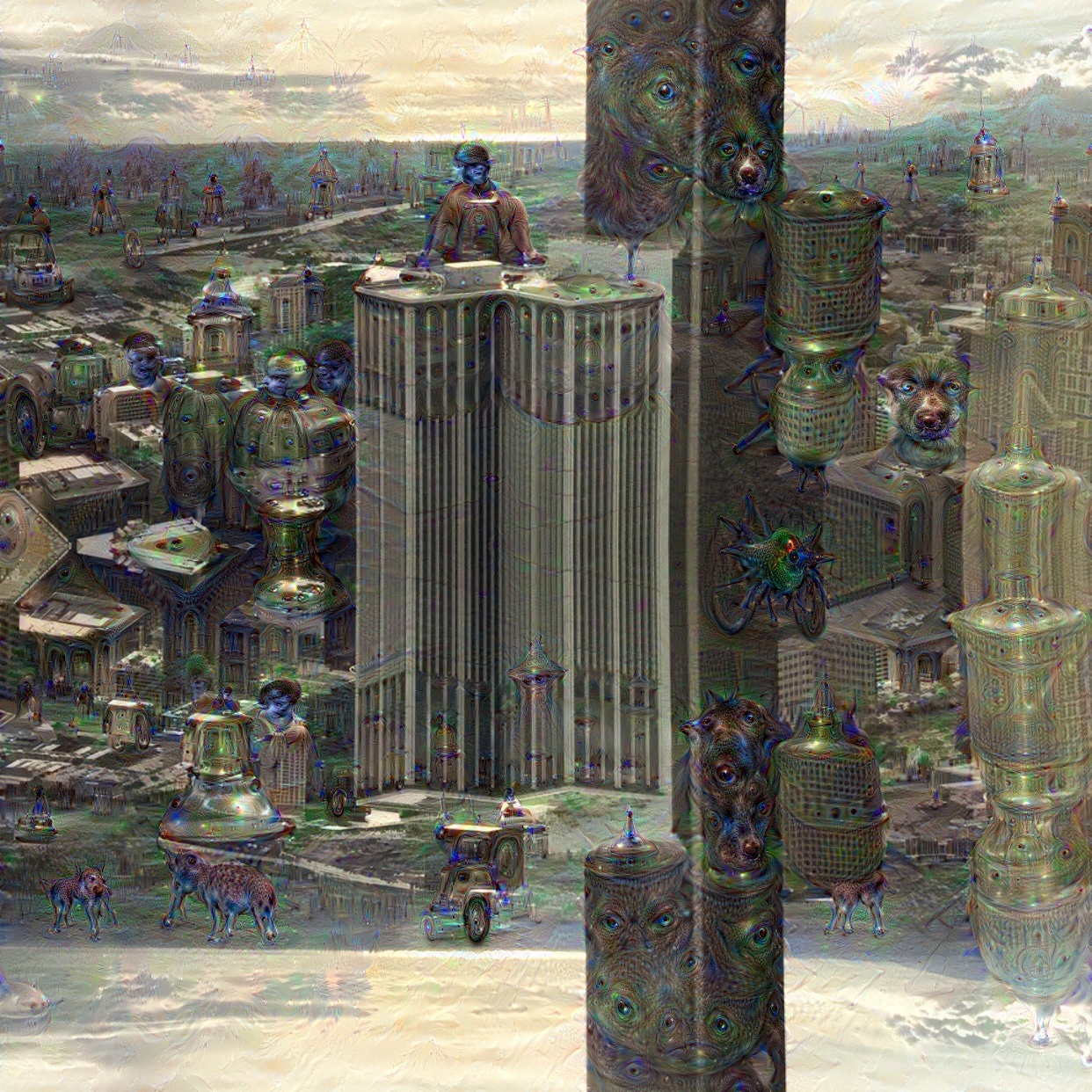
inception_4a/3x3_reduce
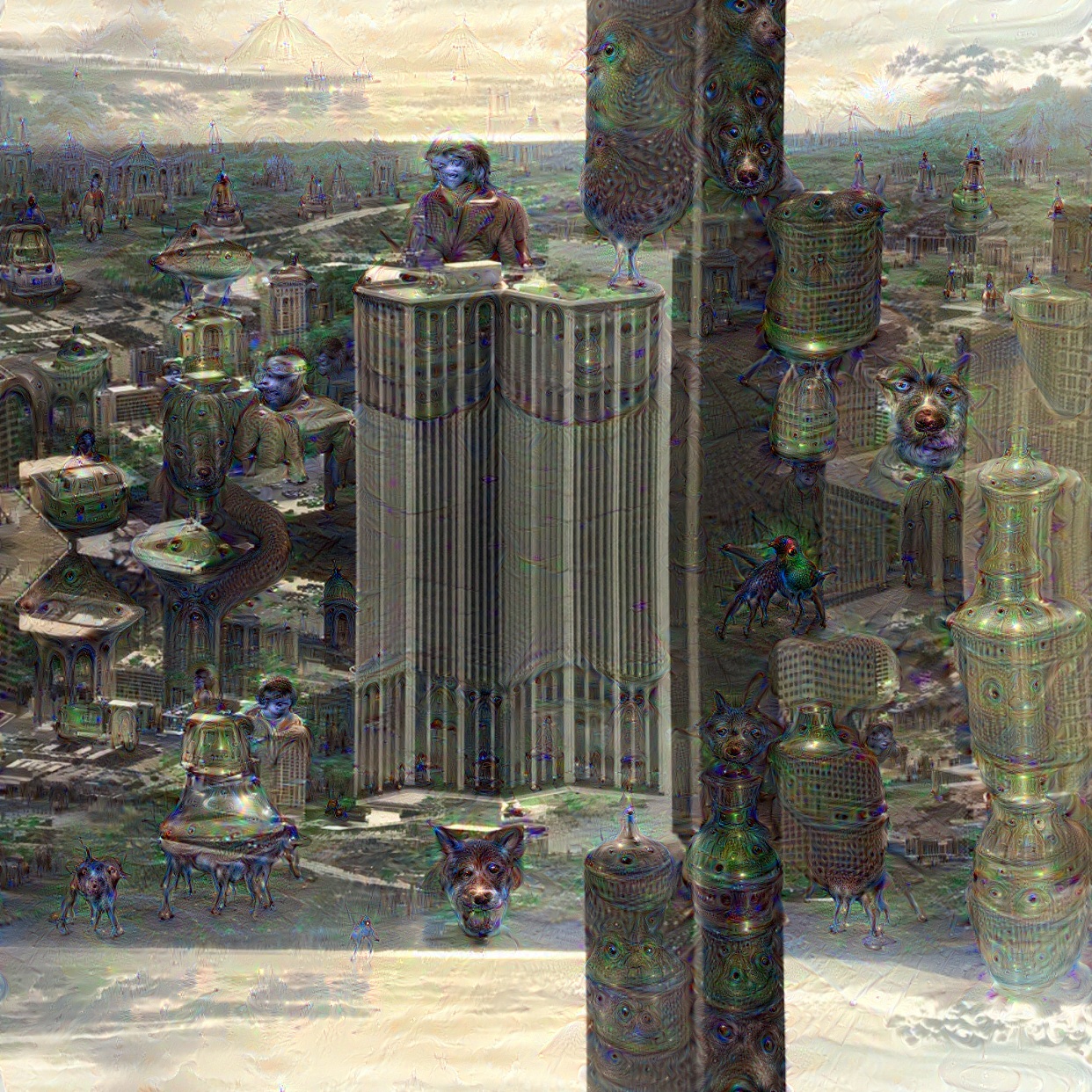
inception_4a/pool_proj
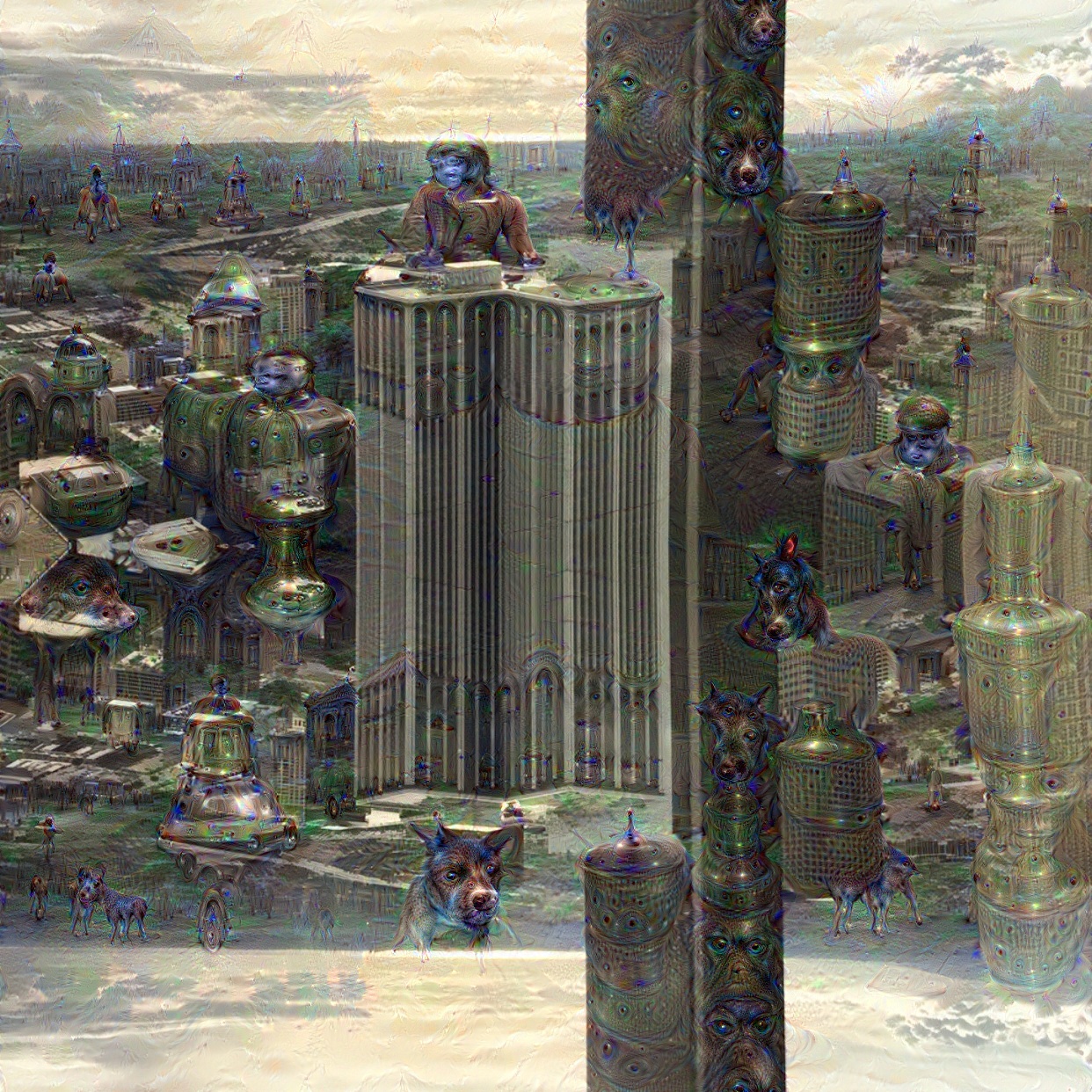
inception_4a/5×5
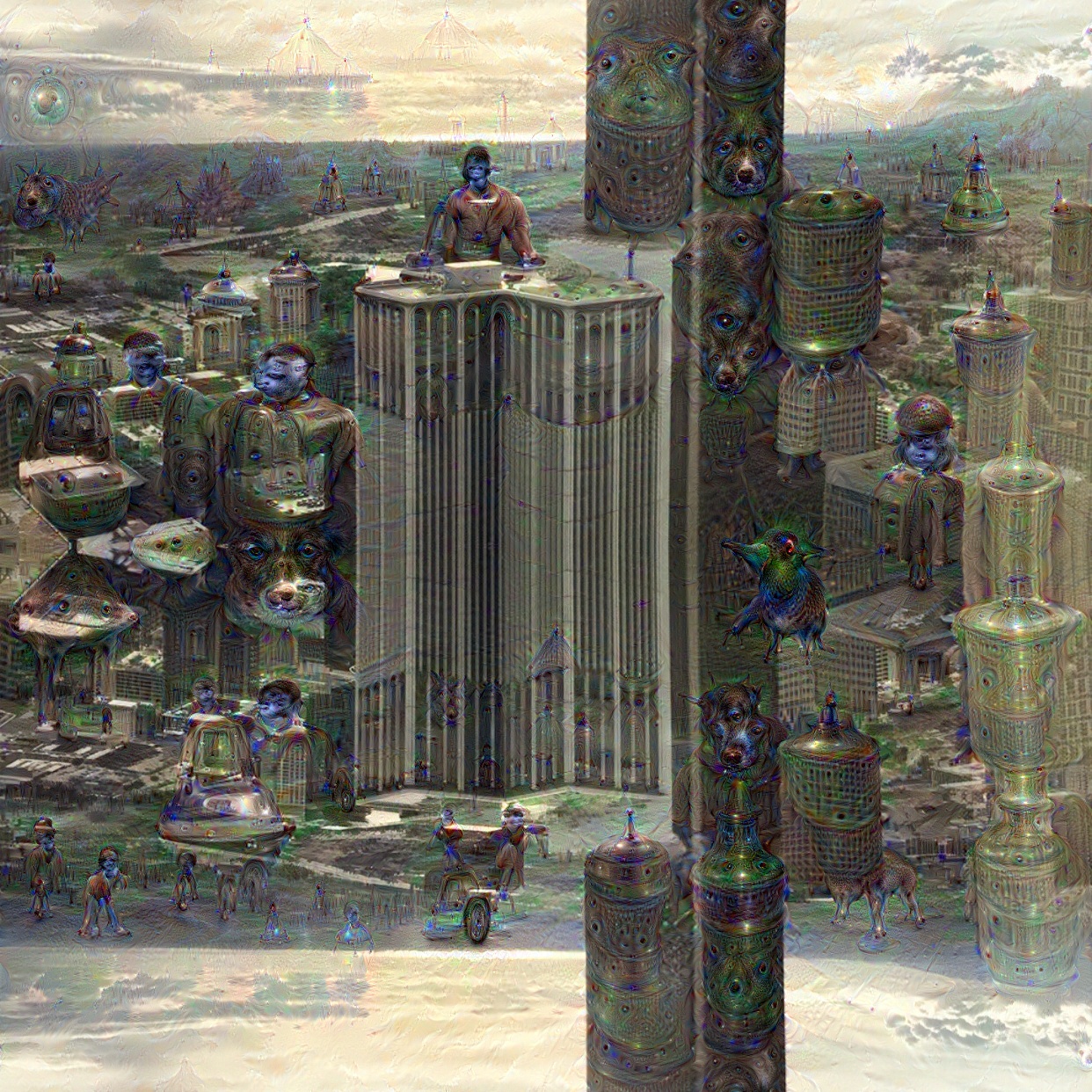
inception_4a/3×3
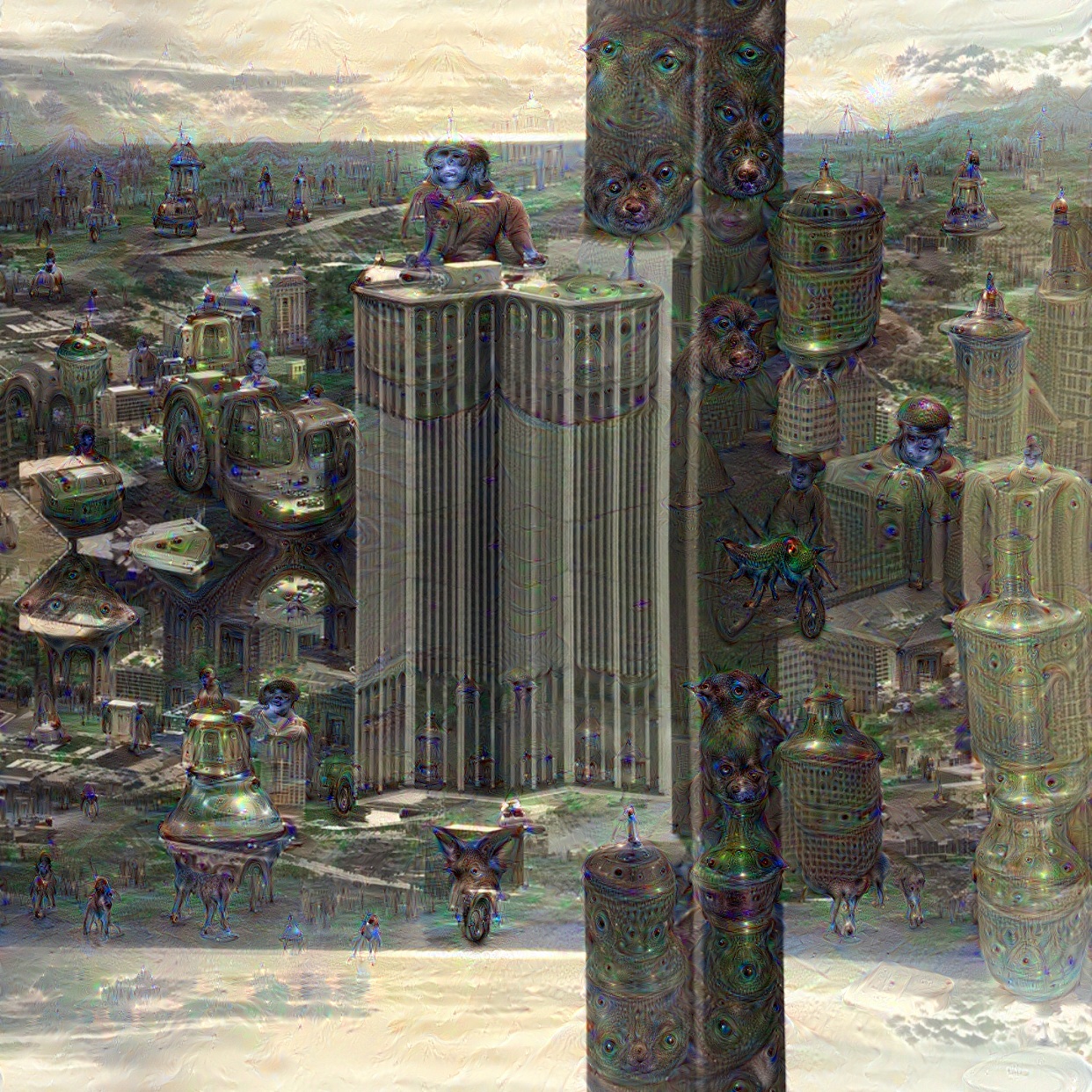
inception_4a/output
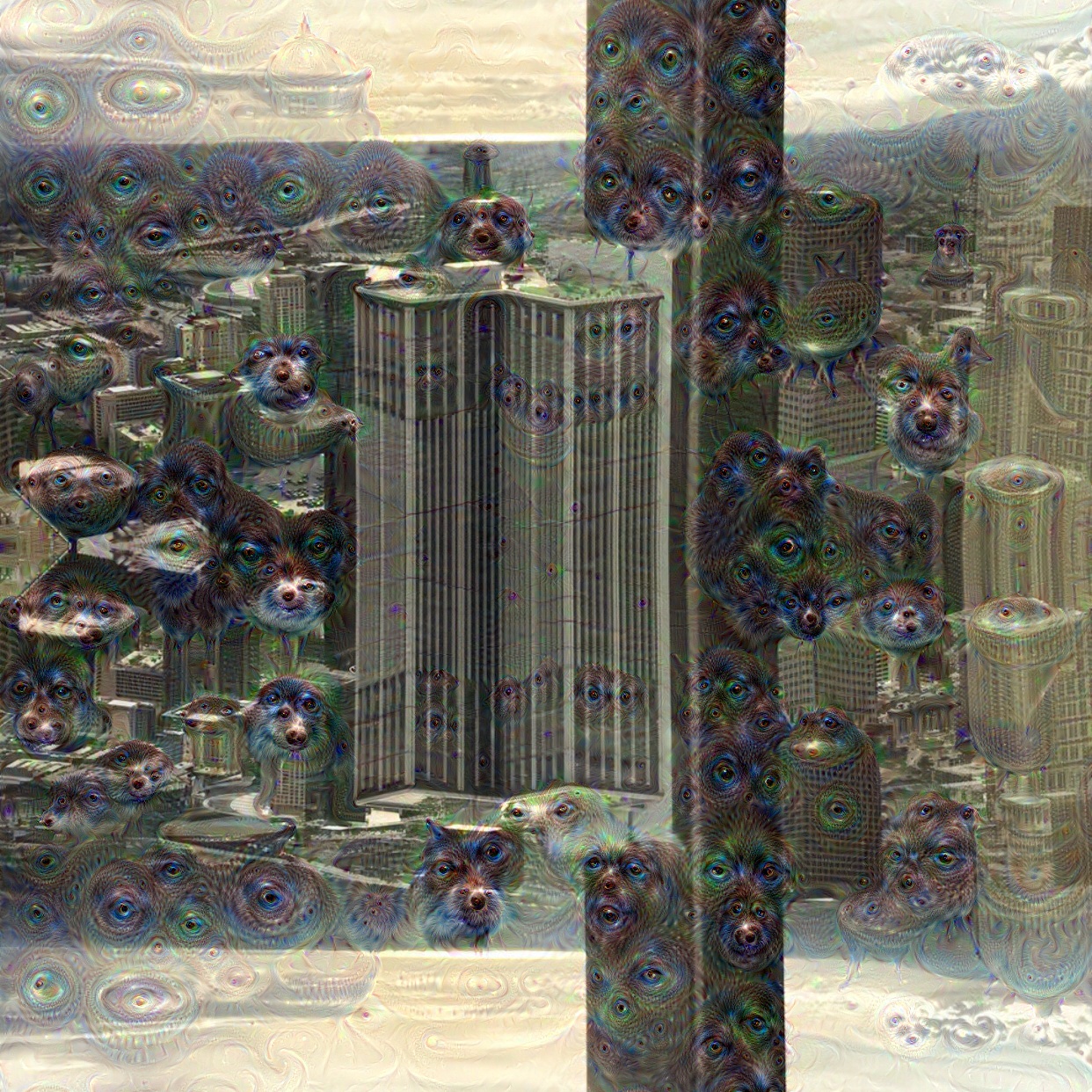
inception_4b/pool
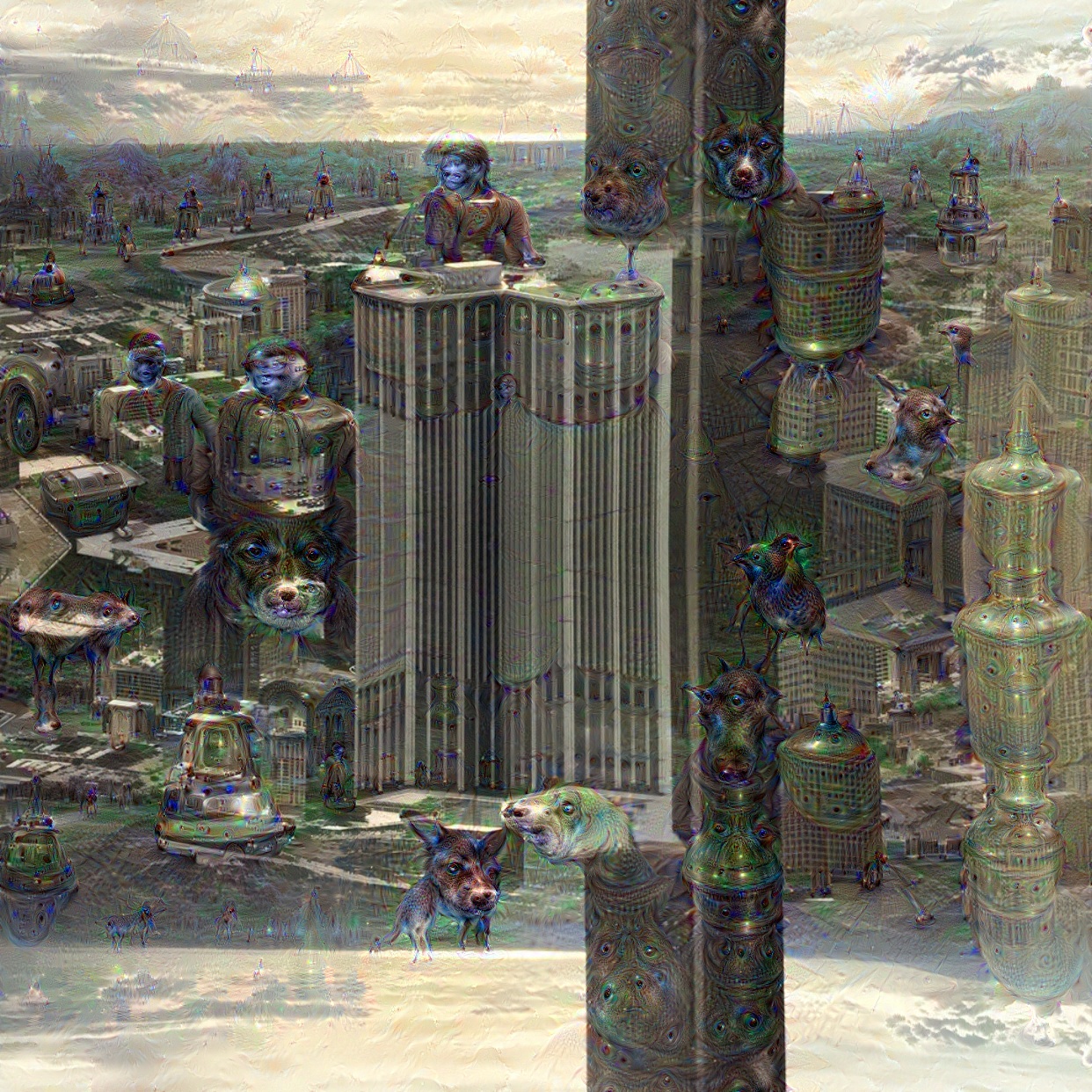
inception_4b/output
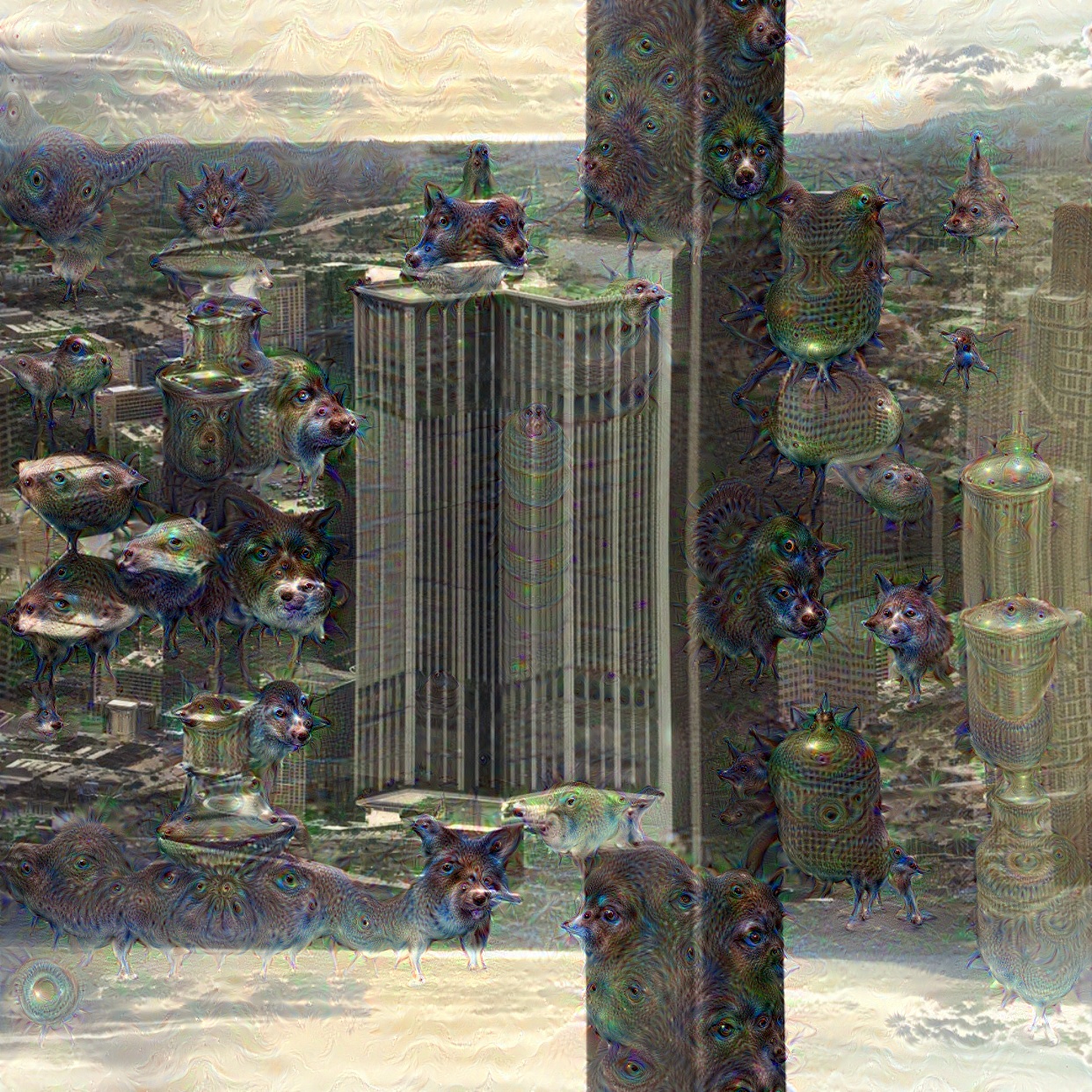
inception_4c/output
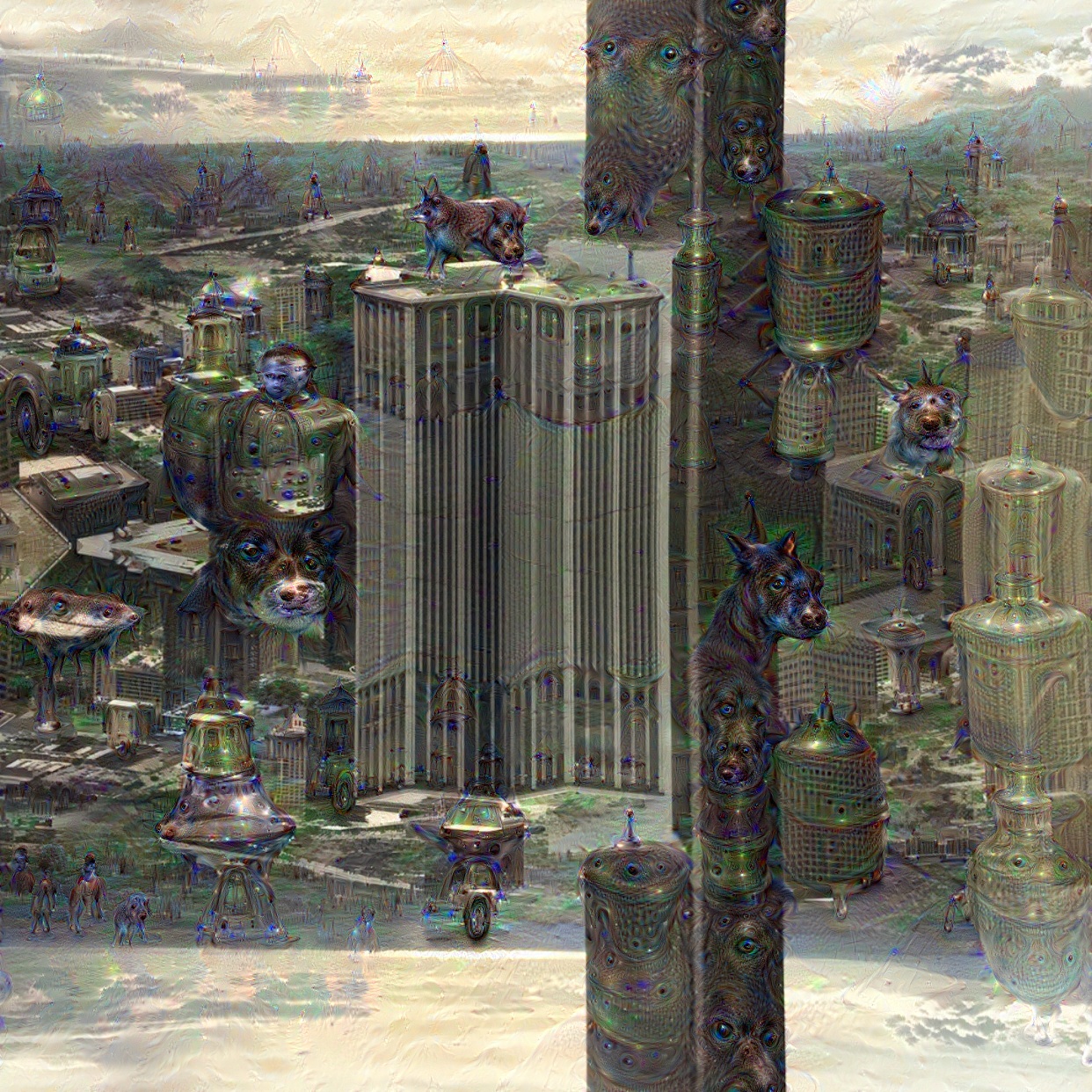
inception_4d/output
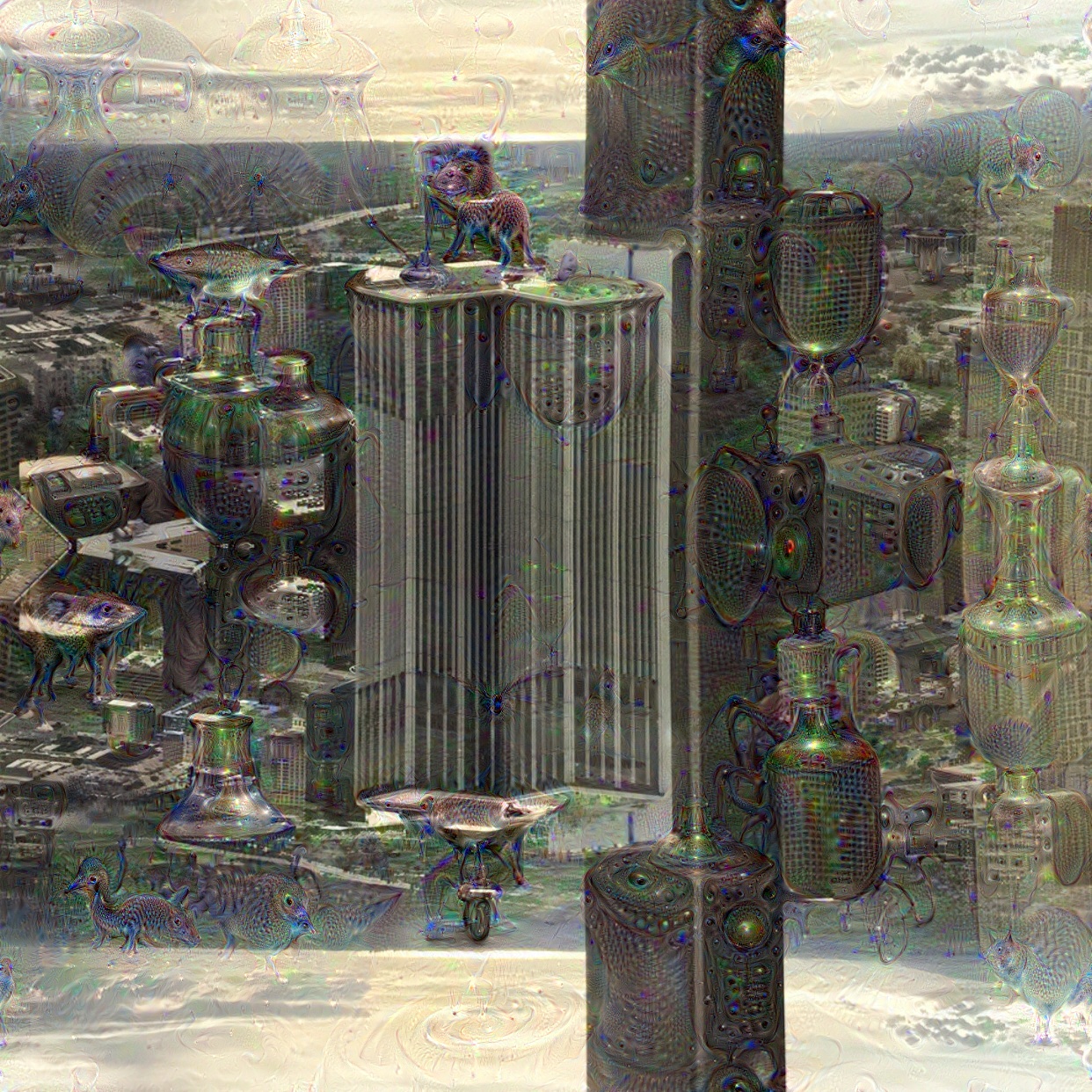
inception_4e/output
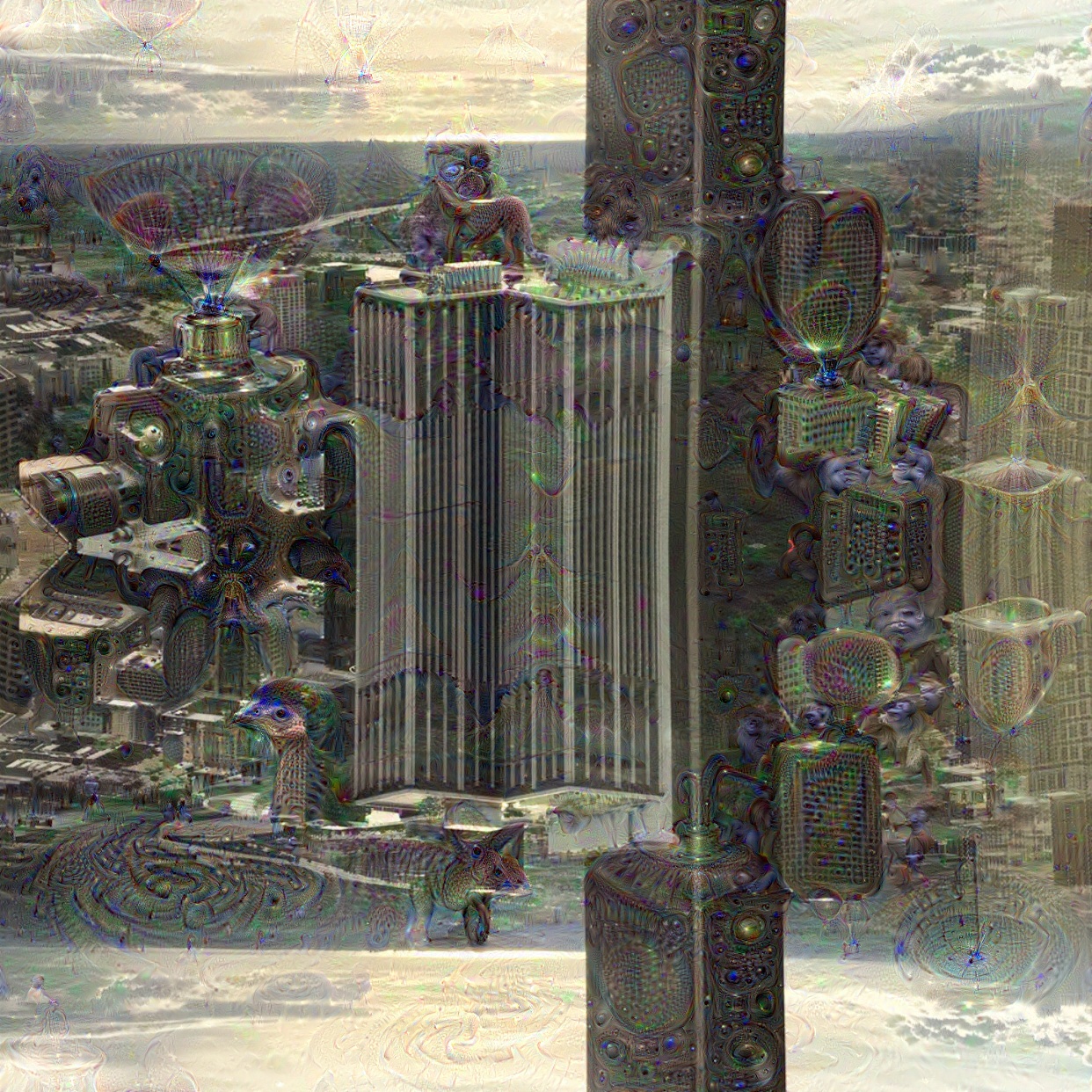
inception_5a/output
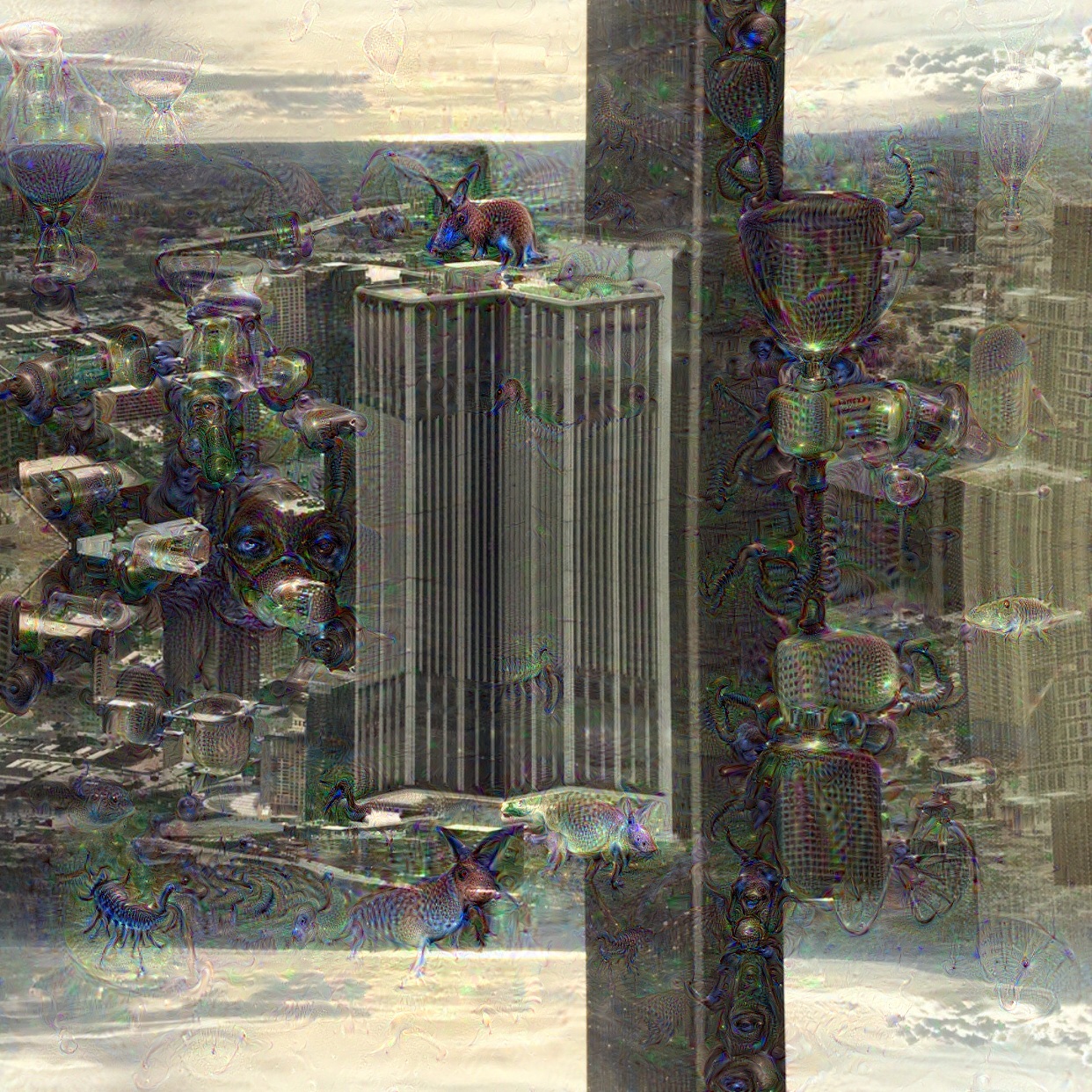
inception_5b/output
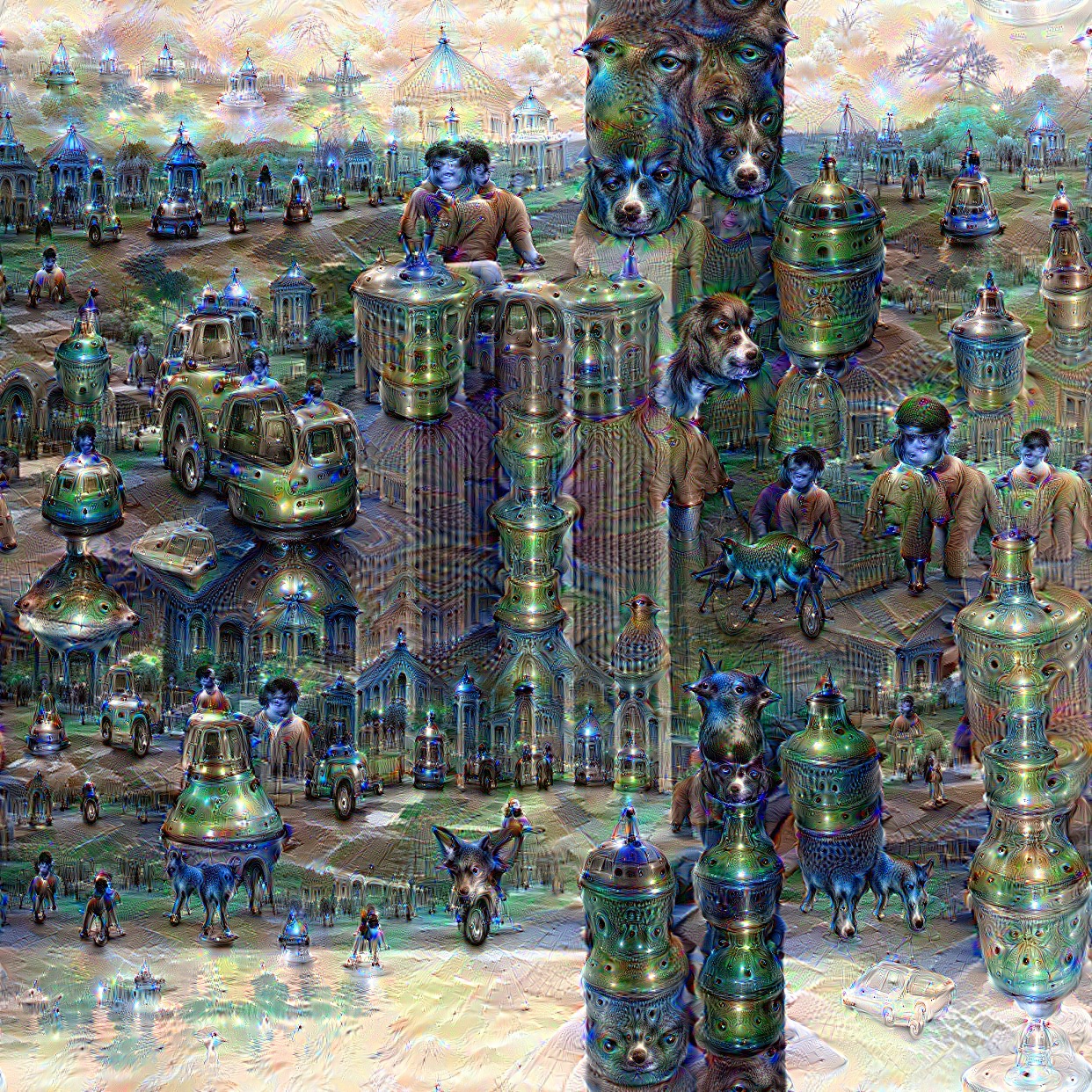
Here’s one where I ran the deep dream several times:
Originally published on abewrites.
clustrmaps.html